Creative Teams: Build an Agency Delivery Workflow in an Afternoon
Creative Teams: Build an Agency Delivery Workflow in an Afternoon

An agency delivery workflow is a repeatable sequence of named steps and owners that moves work from intake to approved delivery. It only works when every handoff has one owner, one required output, and a capacity check before the next step starts. Skip any of those three, and the same three failures show up: scope creep, revision spirals, and missed dates.
TL;DR:
- An agency delivery workflow must assign a single owner and define a specific output at each step to prevent scope creep, revisions, and missed deadlines.
- The key stages include intake with a complete brief, capacity check, strategy lock, production, review, client feedback, final delivery, and a post-delivery retrospective.
- Using standardized forms, automation, templates, and clear deadlines for feedback significantly reduces project bottlenecks and total hours spent.
- Capacity planning based on historical data and buffer targets helps avoid overloading the team and ensures realistic deadlines.
- Systematic enforcement through tools like Posthive supports ownership, version control, and automated notifications, improving overall workflow reliability.
Table of Contents
- What Is an Agency Delivery Workflow, Really?
- The Complete Delivery Workflow: Intake to Retrospective
- Systems and Tools That Make the Workflow Stick
- Optimization Tactics That Actually Save Time
- How Should Agencies Plan Capacity and Avoid Overload?
- Common Failure Points and How to Fix Them
- Checklists You Can Copy Today
- What Metrics Actually Matter After Delivery?
- Where Posthive Fits Into the Workflow
- What I’ve Learned Watching Agencies Adopt This
- Get Your Delivery Workflow Running This Week
- Sources
What Is an Agency Delivery Workflow, Really?
A delivery workflow is different from generic workflow management. Workflow management is the governance layer, the policies, tools, and reporting that oversee how work moves through an organization. A delivery workflow is the specific, ordered path one project takes from brief to final asset, with a named person accountable at each stage.
That distinction matters because agencies often build elaborate project management dashboards while leaving the actual handoffs undefined. Someone finishes a design draft and nobody is formally responsible for the next thirty minutes of it. A repeatable agency workflow names an owner for every step and defines the exact output that step must produce before work passes forward. No owner, no output, no handoff. That single rule eliminates most of the “I thought you were handling that” conversations that stall projects at week three.
Three structural models cover most agencies:
- Waterfall: strict sequential stages, best for fixed-scope work like brand guideline documents or annual reports where requirements rarely shift mid-project.
- Agile/sprint-based: short iterative cycles, best for ongoing retainer work like social content or website builds where priorities shift weekly.
- Hybrid: a fixed overall timeline with sprint execution inside production. Most creative agencies land here because clients want a locked date but the creative process itself benefits from iteration.
A hybrid approach that locks the calendar but runs execution in sprints tends to outperform pure versions of either model for creative deliverables.
The Complete Delivery Workflow: Intake to Retrospective
This is the ordered sequence, with an owner and a required output at every stage. Map your team’s actual titles onto these roles; the labels matter less than the fact that someone specific holds each one.
1. Intake and standardized brief
Owned by the account manager or client lead. The required output is a completed brief, not a request email. A usable brief needs: objective, audience, deliverable specs, brand assets and references, deadline, budget or hours, and approval chain (who signs off on the client side). Reject incomplete briefs at the door. This is the single highest-leverage rule in the entire workflow, because most agency breakdowns trace back to ambiguous process definitions rather than tool failures or staffing gaps. A brief missing a deadline or approval contact gets bounced back before it ever touches a calendar.
2. Capacity check and prioritization
Owned by the traffic manager, not the account manager and not the creative lead. This role exists specifically to say no. Before any project gets scheduled, the traffic manager checks current team load against the new request’s hour estimate. Conflating the traffic manager role with project management or creative leadership is a common cause of missed capacity signals and overloaded schedules. If nobody owns capacity specifically, everybody assumes someone else is watching it.
3. Kickoff and strategy lock
Owned by the project manager. The required output is a strategy lock document: a one-page summary of creative direction, key messages, and format specs that every stakeholder signs off on before production starts. Attendees should be limited to the PM, creative lead, and account manager, plus the client only if the project is unusually complex. This meeting exists to prevent the client from redefining the project’s direction during round two of revisions.
4. Production
Owned by the creative lead, who breaks the strategy lock into individual tasks assigned to specific team members. Parallel execution works when subtasks are truly independent, copywriting and rough video edits, for instance; leveraging professional audiovisual production services ensures smooth coordination in such complex workflows. Sequential execution is required when one task’s output feeds directly into another, like final copy needing to lock before voiceover recording. A hybrid model schedules the overall production window on a fixed timeline while running the actual task execution in short sprints, which gives creatives room to iterate without blowing the deadline.
5. Internal review and QA
Owned by the creative lead or a designated senior reviewer, never the person who produced the work. The checklist here should catch brand compliance, spec accuracy (dimensions, file formats, platform requirements), and obvious factual or grammatical errors, before the client ever sees a draft. This step alone catches the majority of embarrassing mistakes that would otherwise surface in front of a paying client.
6. Client review and structured feedback
Owned by the account manager, who consolidates feedback into one document. This is where revision cycles either stay controlled or spiral. Enforce rules that consolidate feedback to a single named approver and set reasonable limits on revision rounds as specified in contracts or briefs, without specifying an exact number. Single-source proofing and enforced revision limits materially cut down the number of revision cycles agencies deal with compared to open-ended feedback loops.
7. Approval, packaging, and delivery
Owned by the project manager. Required output: final files in the client’s specified formats, correct naming conventions, metadata attached, and a delivery note summarizing what was delivered and any outstanding items. This step is where rushed agencies lose credibility, sending a folder of mismatched file versions with no explanation is a fast way to trigger a panicked client call.
8. Post-delivery retrospective
Owned by the project manager, run within a week of delivery. The output is a short document comparing planned hours to actual hours and noting what should change in the template for next time.
Systems and Tools That Make the Workflow Stick
A workflow written in a document and never enforced by a system decays within a month. The minimum toolset an agency needs:
- A standardized intake form (not an open email inbox) that rejects submissions missing required fields.
- A centralized project board visible to every role, not scattered across separate spreadsheets per department.
- A proofing and version control system so feedback attaches to the exact file version it references.
- A capacity dashboard the traffic manager checks before accepting new work.
- Cloud storage with consistent folder and naming structure for final deliverables.
Configuration matters more than the tool brand. Status codes should be limited and specific, “waiting on client,” “in internal review,” “in production,” rather than a vague “in progress” that tells nobody anything. Handoff notifications should fire automatically when a status changes, and review windows should be locked with actual deadlines rather than open-ended “whenever you get a chance” language.
Calendar sync between the project board and individual team calendars prevents double-booking. Cloud storage links inside task cards, rather than files buried in a separate drive, cut down on the “where is the latest version” messages that eat up a surprising share of a project manager’s day. A tool like Posthive’s productivity suite handles version management and task tracking in one place specifically to remove that friction.
Pro Tip: Automation should never fully replace a human check on client-facing output. Automated systems still need a verification checkpoint before anything reaches a client, because an automated status update that skips human review can send a wrong file version straight to a client inbox.
Optimization Tactics That Actually Save Time
Most agency workflow advice sounds good but changes nothing in practice. These five tactics have a direct, measurable effect on hours saved:
- Gate briefs before they enter the system. An incomplete brief should never reach a project board. Build the rejection into the intake form itself so account managers can’t submit around it.
- Automate notifications, not decisions. A status change should trigger an automatic alert to the next owner. But anything flagged as at risk, over budget, or behind schedule needs to escalate to a person, not just log quietly in a dashboard nobody checks that week.
- Build templates for repeatable project types. A social content calendar and a brand video have different task sequences; pre-built templates for each cut setup time to nearly zero and prevent forgotten steps.
- Lock feedback rounds with real deadlines. “Feedback due by end of day Friday” beats “let us know your thoughts soon.” Attach a specific date to every review window, every time.
- Forecast capacity automatically, but let a person make the accept/decline call. A dashboard that flags an overbooked week is useful. A dashboard that auto-accepts new work regardless of that flag is not.
Standardizing these practices, templates, centralized boards, and automated reminders has been shown to save agency teams more than 20 hours a week in reported case data, largely by eliminating status-check meetings and duplicate file searches.
Pro Tip: Start automation with the most repetitive, lowest-judgment task in your workflow, usually status notifications or file naming, and expand from there. Automating a judgment-heavy step first, like client feedback interpretation, tends to backfire.
How Should Agencies Plan Capacity and Avoid Overload?
Capacity planning turns a brief into a number of hours before anyone commits to a deadline. Start from historical baselines: if the last five brand video projects averaged 34 hours of production time, quote the sixth one against that number, not against optimism.
Set a utilization target below full capacity, typically within a range that allows buffer time for revisions and urgent tasks, reserving the rest as buffer for revisions, client delays, and the inevitable urgent request.
The traffic manager needs clear rules for what happens when a new request arrives against a team already near capacity:
- Accept only if current utilization has buffer room and the deadline is realistic against the historical baseline.
- Reschedule if the deadline is flexible but the team is currently over capacity.
- Decline or push to a freelancer if neither the deadline nor the capacity has room to move.
Certain conditions such as unrealistic deadlines, missing approval contacts, or potential overloading of team members should trigger a review before accepting new work.
Common Failure Points and How to Fix Them
Most delivery breakdowns trace to the same four causes, and each has a specific fix rather than a vague “communicate better” answer.
- Poor intake shows up as scope confusion mid-project. Fix it by making the standardized brief mandatory, with rejection built into the intake form itself.
- Feedback chaos shows up as contradictory notes from three different client stakeholders. Fix it by naming a single approver in the brief and refusing to act on feedback from anyone else.
- Scope creep shows up as “just one more small change” requests outside the agreed revision count. Fix it with a written change order process: any request beyond the capped rounds gets a new estimate and, often, a new invoice line.
- Resource conflicts show up as one designer assigned to three deadlines on the same day. Fix it by giving the traffic manager veto power over new bookings, not just visibility into them.
Establish an escalation ladder where delayed or over budget projects escalate appropriately within the team hierarchy, without specifying exact delay durations. When a project trips into red, the immediate triage is: freeze new scope, confirm the actual remaining hours needed, and communicate the revised timeline to the client within 24 hours rather than letting the deadline pass silently.
Pro Tip: Document and communicate your escalation process to clients early to improve their response to project updates and delays.
Checklists You Can Copy Today
Intake brief, minimum required fields:
- Objective and target audience
- Deliverable specs (format, dimensions, length)
- Brand assets and reference materials
- Deadline and named approval contact
- Budget or allotted hours
Internal review, before anything reaches the client:
- Brand compliance checked against guidelines
- File specs verified (format, resolution, platform requirements)
- Copy proofread for factual and grammatical accuracy
- Sign-off logged with reviewer name and date
Delivery packaging, before handoff:
- Final files named per agreed convention
- Metadata and version numbers attached
- Delivery note listing what’s included and any outstanding items
- Archive copy stored in the project’s permanent folder
Customize each checklist by project type. A video project’s delivery checklist needs codec and aspect ratio fields a static design project never touches; a post-production workflow built for media teams will differ meaningfully from one built for print.
What Metrics Actually Matter After Delivery?
Four numbers tell you whether the workflow is working: planned versus actual hours, number of revision rounds used against the cap, on-time delivery rate, and rework hours per project (time spent fixing avoidable mistakes rather than doing planned creative work).
Run the retrospective within a week of delivery, while details are fresh, and keep it under 30 minutes. Ask three questions: where did actual hours diverge from the estimate, which stage caused the biggest delay, and what should change in the template before the next similar project. Binding retrospectives to those specific metrics, rather than a general “how did it go” conversation, is what actually improves future estimates over time.
- Planned vs. actual hours by stage
- Revision rounds used vs. contracted cap
- On-time delivery rate across the quarter
- Rework hours as a percentage of total project hours
Feed these numbers back into your estimating templates every quarter.
Where Posthive Fits Into the Workflow
Posthive maps directly onto the handoff points above. Version management keeps every file revision tied to its review status, so feedback attaches to the right draft instead of an outdated one. Task tracking gives each workflow owner a visible queue, and calendar integration keeps review windows and delivery dates synced across the team.
Setup takes an afternoon: name an owner for each stage inside the project board, configure automatic handoff notifications between them, and lock review windows with real deadlines rather than open dates. Posthive’s handoff checklist for creative teams and version tracking guide both walk through the exact configuration.
What I’ve Learned Watching Agencies Adopt This
Two lessons stand out from watching agencies try to formalize their delivery process. First, resistance almost always comes from senior creatives who see standardized briefs as bureaucracy, not from junior staff. What wins them over is showing that a tighter brief means fewer client-driven direction changes mid-project, not more paperwork. Second, standardization works best when it governs handoffs and deadlines, not the creative process itself. Lock the calendar and the ownership; leave the actual craft alone.
— Lorenz
Get Your Delivery Workflow Running This Week
Everything above works better with a system that enforces it automatically instead of relying on someone remembering to update a spreadsheet. Posthive is built specifically for the handoffs this article walks through: named owners, version-locked files, and task tracking that flags a stalled review before it becomes a missed deadline. Instead of chasing feedback across email threads and shared drives, your team works from one project space where clients keep visibility over their own deliverables and versions.
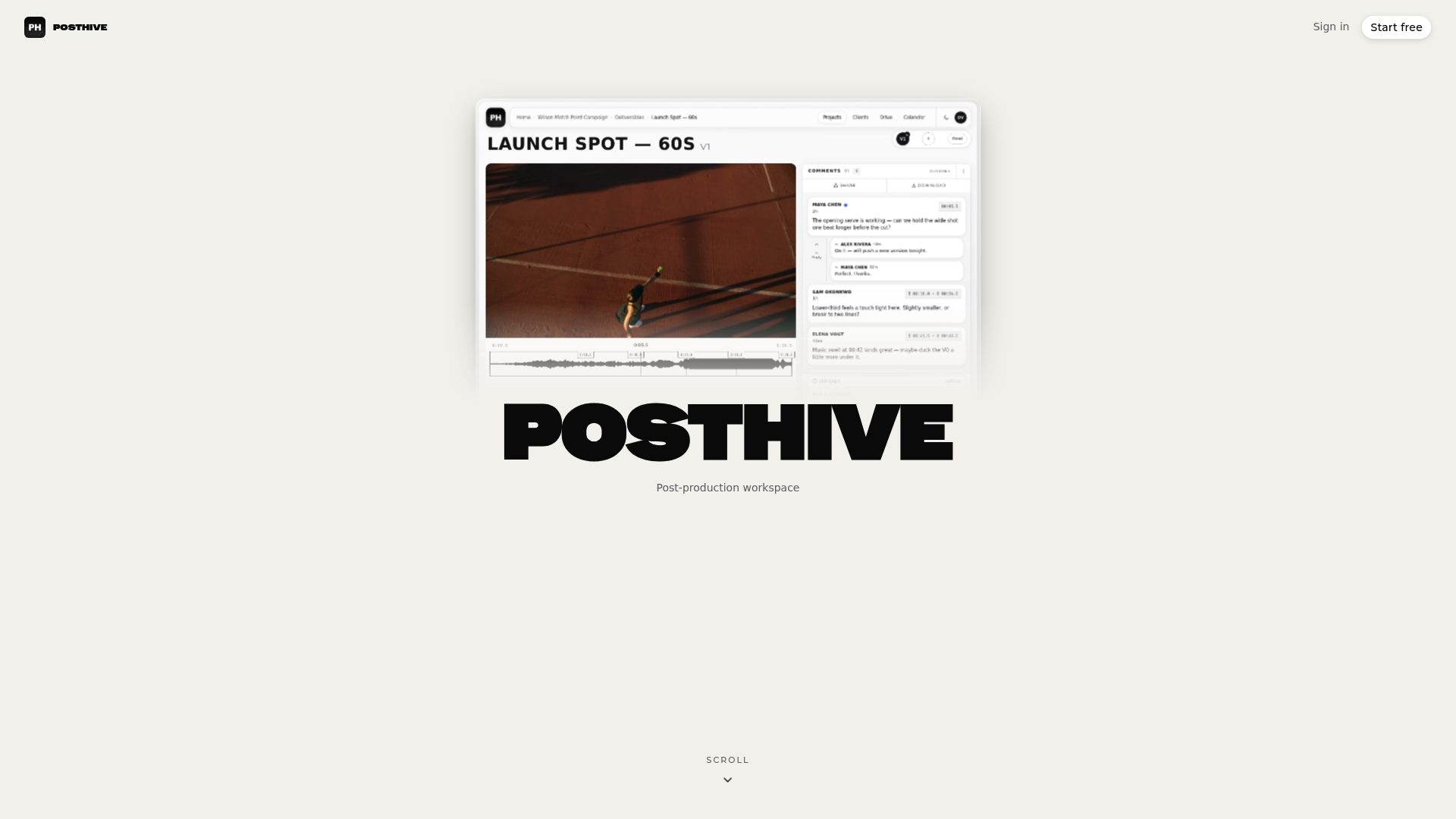
If you’re rebuilding your intake-to-delivery process this quarter, start by mapping your current steps onto the owners and outputs described here, then set up the corresponding project structure in Posthive. Visit the Posthive landing page to start a trial and configure your first workflow template today.
Sources
- Agency project workflows: A guide for scalable success | Teambuilt Blog
- Streamline Your Agency: 12 Workflow Optimization Strategies That Save 20+ Hours Weekly | Ravetree
- Agency Workflow Guide - Types, Process & Best Practices | Productive
- AI workflow automation: The complete guide (2026) | Synta