Finish Client Onboarding in 5 Days for Creative Agencies & Freelancers
Finish Client Onboarding in 5 Days for Creative Agencies & Freelancers

The right approach is a five-stage, portal-first onboarding: confirm, collect, kickoff, set up, first win. Firms that run it this way finish onboarding in about five days and land a first deliverable within 7 to 14 days, cutting revision rounds and raising retention. The OnboardMap benchmark, PMI’s project guidance, and tools like Posthive all point to the same fix: one link, named owners, no guesswork.
TL;DR:
- Using a single portal link for onboarding accelerates the process by 2.3 times and significantly improves client retention.
- Key onboarding stages should be owner-assigned, each with clear “done” criteria, and completed within five days for optimal results.
- Collecting complete brand assets and confirming final approver before starting work reduces revision rounds by up to three times.
- Automated, specific reminders increase intake completion rates by about 60 percent, preventing delays caused by missing assets or ambiguous approvals.
- Integrating onboarding tools with CRM and project management systems streamlines workflows, reduces manual effort, and ensures accurate data flow.
Table of Contents
- Why Structured Onboarding Matters for Creative Teams
- A Five-Stage Onboarding Process With Owners and Target Days
- What to Collect and How to Collect It in One Link
- Creative, Low-Friction Onboarding Rituals Tailored to Production Work
- The Tools and Automations That Cut Follow-Up Work and Speed Onboarding
- Copy-and-Run Onboarding Checklist: Tasks, Owners, and “Done” Criteria
- KPIs That Predict Retention and How to Track Them Simply
- How Posthive Applies These Principles in Production Workflows
- Contract, Deposit Confirmation, and the Welcome Package
- Delivering an Early Win to Build Confidence
- Personalization Strategies for Different Client Types
- Building Rapport and Trust During Onboarding
- Common Challenges in Creative Client Onboarding
- Feedback Loops and Continuous Improvement in Onboarding
- Legal and Compliance Considerations Beyond the Signed Contract
- Integrating Onboarding With CRM and Project Management Tools
- What the Research Actually Supports, and What Agencies Get Wrong
- Posthive: A Direct Way to Run This Playbook
- Sources
- FAQ
Why Structured Onboarding Matters for Creative Teams
Most agencies lose clients in the first 30 days, not because the creative work misses the mark, but because nobody could find the brand guidelines, nobody confirmed who signs off on revisions, and the kickoff call got rescheduled twice before anyone opened a file. Onboarding is where trust gets built or spent, and creative teams spend it faster than most because the first deliverable is subjective by nature. A client who feels lost during intake starts every review with suspicion instead of confidence.
The data backs this up in a specific way. According to OnboardMap’s benchmark report, top-performing firms respond to new clients within four hours, complete onboarding roughly 2.3 times faster than average by using a single portal link instead of email chains, and see meaningfully higher retention as a result.
Statistic Callout: Firms using a single portal link for onboarding complete the process about 2.3 times faster than those relying on email, and they retain more clients afterward, according to the OnboardMap Client Onboarding Benchmarks.
The failure modes are predictable once you’ve seen them a few dozen times. Missing brand assets stall the first design pass. An unclear approver means three people give three conflicting notes on the same round. A slow kickoff, pushed a week because “the client is traveling,” sets a tone of delay before any billable hour has been logged. None of these are creative problems. They’re process gaps, and they’re the same gaps PMI’s guidance on complex projects flags across industries: undefined ownership, undocumented scope, and no agreed milestones. Fix the structure and the creative work gets a fair shot at speaking for itself.
A Five-Stage Onboarding Process With Owners and Target Days
Borrowing from the structured system that Agiled’s onboarding framework and similar agency guides converge on, five stages cover the full arc from signed contract to first delivered work. Each one needs a named owner and a clear definition of “done,” or it becomes a place where projects quietly stall.
- Stage 1: Confirm (Day 0 to 1). Owner: account lead. Output: signed contract or SOW, deposit received, welcome email sent within hours, not days. Done means the client has a single link to everything else.
- Stage 2: Collect (Day 1 to 3). Owner: project coordinator. Output: completed intake questionnaire and all required brand assets uploaded to the portal. Done means every “must-have” field is filled, not just started.
- Stage 3: Kickoff (Day 3 to 4). Owner: creative director or lead. Output: a live or recorded kickoff call, plus a written recap naming the point of contact, the approver, and the delivery date for the first draft. Done means the client can repeat back who does what.
- Stage 4: Set Up (Day 4 to 5). Owner: producer or operations lead. Output: project created in the production workspace, tasks assigned, calendar synced, version control structure in place. Done means the creative team can open a file and start without asking a single setup question.
- Stage 5: First Win (Day 5 to 14). Owner: creative lead. Output: a small, tangible deliverable, a mood board, a rough cut, a concept sketch, delivered ahead of the full first milestone. Done means the client has something concrete to react to.
Compress stages when the project is small. A single-asset freelance job might merge Confirm and Collect into one afternoon.
Never skip the kickoff recap, though, even for a two-week logo project, because that’s the artifact that prevents the “wait, I thought you were handling that” conversation three weeks later.
Timing windows matter more than they look. Rocketlane’s best-practices research found that structured handoffs paired with tiered templates and a shared portal produce standard implementations of roughly 30 to 45 days for larger scopes, with automation shortening that window further. If onboarding is eating a third of your schedule, the process is broken, not the timeline.
One adjustment worth making: give clients a visible countdown. A portal that shows “3 of 5 intake items complete” does more to speed things along than three separate reminder emails, because it turns an abstract deadline into a concrete gap the client can see closing.
What to Collect and How to Collect It in One Link
Chasing assets by email is the single biggest time sink in creative onboarding, and it’s avoidable. A single portal link, sent at Stage 1, should route everything: intake form, file uploads, contract acknowledgment, and a status view the client can check without asking “did you get my logo files?”
The intake form itself needs specific fields, not vague prompts. Here’s a sequence that works across most creative disciplines:
- Project scope and objective. One paragraph, plain language, what does success look like for this specific project.
- Key stakeholders. Name and role for the approver, the day-to-day contact, and anyone else with sign-off authority.
- Deadlines and non-negotiable dates. Launch date, event date, or publication date, flagged separately from internal milestones.
- Brand guidelines and existing assets. Logo files, color codes, fonts, past campaign examples, style references.
- Folder and naming expectations. State the file-naming convention up front so incoming assets don’t arrive as “final_v2_ACTUAL_final.psd.”
- Budget or scope boundaries. What’s included in the current agreement, so scope creep gets flagged early rather than argued about later.
Pro Tip: Mark three or four fields as genuinely non-negotiable, like brand assets and the approver’s name, and configure the portal to block project kickoff until those specific fields are filled. Everything else can trickle in during Stage 2 without holding up the schedule.
The “must-have before work starts” rule isn’t bureaucratic stubbornness. OnboardMap’s benchmark data found that agencies which start designing before intake is fully complete face roughly three times more revision rounds than those that wait for complete assets. That’s not a minor inefficiency. That’s the difference between two revision cycles and six, on every single project, compounding across a full client roster.
A single link also solves a quieter problem: accountability. When everything routes through one portal, there’s no ambiguity about whether the client “sent that already” or it’s sitting in a spam folder. The post-production calendar template approach, pairing a shared timeline with explicit folder rules, works well as a companion structure for teams that need to lay out both the schedule and the file organization in the same place.
Creative, Low-Friction Onboarding Rituals Tailored to Production Work
Structure builds trust, but a little personality builds affection, and creative clients notice when an agency treats onboarding as an afterthought versus a designed experience. The trick is choosing rituals that add warmth without adding a single day to the timeline.
- A short welcome video from the creative lead, recorded once and personalized with the client’s name and project title, takes 90 seconds and replaces a generic “welcome aboard” email that nobody actually reads.
- A branded welcome board, a simple visual mockup showing the client’s logo already living inside the studio’s world (a mood board, a sample title card), signals momentum before a single hour of billed work happens.
- A preference card, one page where the client notes their communication style, preferred meeting cadence, and pet peeves from past agency relationships, prevents friction that would otherwise surface awkwardly in week three.
- A remote scavenger hunt through the portal, a lightweight checklist that rewards the client for exploring the workspace (find the task board, check the calendar, open the review tool), works surprisingly well for remote clients who might otherwise never learn where anything lives.
- A physical welcome package, a small branded item mailed on Day 1, works best for local or high-value clients where an in-person or tactile touch justifies the cost.
Match the ritual to the client’s context rather than running the same playbook for everyone. Remote clients respond well to the scavenger hunt and the welcome video because both work asynchronously and respect time-zone differences. In-person or local clients get more mileage from the physical package and an actual sit-down kickoff, because the tactile and social elements land harder face to face.
The governing rule, drawn from research on creative onboarding ideas across industries, is that none of these rituals should delay the first deliverable. A welcome video that takes the creative director two hours to script and shoot is not worth it if it pushes Stage 5 back by a day. Keep every ritual templated, reusable, and capped at 15 to 20 minutes of setup time per client. If a ritual can’t survive being run 40 times a year without burning out the team, cut it.
The Tools and Automations That Cut Follow-Up Work and Speed Onboarding
Email is the enemy of fast onboarding, not because it’s slow to send, but because it’s slow to track. A message sent to a client sits in an inbox with zero visibility into whether it was opened, ignored, or forwarded to someone who left the company six months ago. A portal link removes that ambiguity entirely, giving both sides the same view of what’s done and what’s outstanding.
The automation recipe that consistently works follows a simple sequence:
- Triggered welcome email, sent automatically the moment a contract is signed, containing the single portal link and nothing else.
- Intake dispatch, an automated nudge that opens the intake form inside the same portal, no separate login required.
- Invoice or deposit confirmation, tied to the same trigger so billing and onboarding move in lockstep instead of on separate tracks.
- Portal provisioning, where the project workspace, folder structure, and task list get created automatically rather than manually by whoever remembers to do it.
- Reminder schedule, sent on a fixed cadence, typically day 2, day 5, and day 10, chasing only the specific fields still incomplete.
That reminder cadence isn’t arbitrary. OnboardMap’s research found that automated, specifically-worded reminders raise intake completion rates materially compared with manual follow-up emails written fresh each time. The specificity matters as much as the automation: a reminder that says “please upload your logo files” outperforms one that says “please complete your onboarding” because it removes a decision the client would otherwise have to make.
Statistic Callout: Automated, specific reminders raise intake completion rates by about 60% over manual follow-ups, according to OnboardMap’s onboarding benchmark data.
On integration priorities, don’t try to automate everything at once. Focus first on project creation (so a signed contract automatically spins up a workspace), named task assignment (so the client and the team both see who owns what from day one), and version control (so the first round of creative work doesn’t arrive as an email attachment with no history). Rocketlane’s implementation research points to agentic automation, systems that generate project plans and handoff documents directly from a signed scope of work, as a meaningful reduction in both setup time and human error. Teams evaluating white-label automation tools for templated onboarding flows might look at a configurator platform built for exactly that kind of conditional logic.
Copy-and-Run Onboarding Checklist: Tasks, Owners, and “Done” Criteria
Paste this into whatever project management tool the studio already runs. Each line has an owner and an explicit finish condition, so nothing depends on memory.
- Send welcome email with portal link. Owner: account lead. Done when the client has clicked the link within 4 hours of contract signature.
- Confirm deposit received. Owner: finance or account lead. Done when payment clears and the client gets an automated receipt.
- Client completes intake form. Owner: client, monitored by coordinator. Done when all fields marked “must-have” are filled.
- Client uploads brand assets. Owner: client, monitored by coordinator. Done when logo, fonts, and reference files are in the correct portal folder.
- Internal kickoff prep. Owner: creative lead. Done when the lead has reviewed the intake form and drafted three discussion points for the kickoff call.
- Kickoff call held. Owner: creative lead. Done when the call happens and a recap is sent within 24 hours naming the approver, the point of contact, and the first deliverable date.
- Project workspace configured. Owner: producer. Done when tasks are assigned, the calendar is synced, and folder structure matches the studio’s naming convention.
- First win delivered. Owner: creative team. Done when a small, tangible deliverable reaches the client between day 7 and day 14.
- Milestone check-in scheduled. Owner: account lead. Done when the next formal review is on the calendar before the first win is even delivered.
A short kickoff notes template pairs well with this checklist: project name, approver, point of contact, first deliverable date, communication cadence, and any stated non-negotiables from the intake form. Keep it to one page. Anyone on the team should be able to read it in under a minute and know exactly where the project stands.
For micro-projects, a single-page logo job or a short social edit, compress steps 5 through 7 into a same-day sprint rather than spreading them across three separate days. For retained clients running multiple projects per year, skip the full checklist after the first engagement and instead run a lighter “re-onboarding” version that only touches new stakeholders or changed scope, since re-explaining the entire process to a client who’s already been through it once wastes their time and yours. The handoff checklist approach used for deliverable rework prevention applies the same logic here: name the owner, name the finish line, skip nothing that protects the relationship.
KPIs That Predict Retention and How to Track Them Simply
Five metrics matter more than the dozen most agencies track. Time-to-kickoff measures the days between contract signature and the actual kickoff call. Client task completion rate tracks the percentage of intake fields filled without a reminder. Time-to-first-deliverable measures days from signature to the first tangible work product reaching the client. Revision rounds count how many rounds the first deliverable requires before approval. Milestone CSAT is a one-question satisfaction score collected right after the first major milestone, not buried in an end-of-project survey where memory has already faded.
| KPI | What it measures | Target benchmark | Who tracks it |
|---|---|---|---|
| Time-to-kickoff | Days from signature to kickoff call | 3 to 4 days | Account lead |
| Client task completion rate | % of intake fields completed without a reminder | High completion, portal-driven | Project coordinator |
| Time-to-first-deliverable | Days from signature to first tangible work | 7 to 14 days | Creative lead |
| Revision rounds (first deliverable) | Number of rounds before approval | Fewer rounds when assets collected upfront | Creative lead |
| Milestone CSAT | Client satisfaction score after first milestone | Collected within 48 hours of milestone | Account lead |
Instrumentation doesn’t need a dedicated analytics stack. A shared spreadsheet or a dashboard inside the project management tool works fine, as long as one person owns updating it weekly. The Rocketlane research notes that client task completion rate and time-to-first-deliverable correlate more strongly with retention than raw activity counts like number of calls or emails sent, so resist the urge to track effort instead of outcome. A team that sends 40 emails but delivers late is worse off than one that sends five and hits the 10-day mark.
How Posthive Applies These Principles in Production Workflows
A production workspace earns its place in this playbook only if it actually maps to the stages above, not just stores files. A production workspace should align with intake, version control, approvals, and client visibility to support the workflow effectively.
- Client-owned deliverables and versions mean the client can review and approve directly inside the workspace rather than through a scattered email thread, which shortens the gap between “delivered” and “approved.”
- Task tracking with named owners mirrors the checklist structure from Stage 3 onward, so kickoff commitments don’t live only in a recap document nobody reopens.
- Cloud connectivity and calendar integration support the Stage 4 setup work, letting a project spin up with dates and structure already in place before the first file lands.
- A single workspace for review and delivery reduces the endless-thread problem that email-based approval chains create, since the client’s feedback and the file version stay attached to each other.
Teams building out their own workspace pattern can look at the workflow guidance for creative ops for a practical model of how review cadence and version control fit together inside a single system.
Contract, Deposit Confirmation, and the Welcome Package
The paperwork stage is where onboarding either starts fast or starts slow, and there’s rarely a middle ground. A signed contract and confirmed deposit should trigger the welcome sequence automatically, not manually, because a two-day gap between “client signed” and “client hears from us” sets a lethargic tone before any creative work begins.
Confirm the deposit through whatever payment processor the studio already uses, and send an automated receipt the moment it clears. Pair that receipt with the welcome package in the same touch point rather than as a separate follow-up days later. The welcome package itself doesn’t need to be elaborate. A short note from the creative lead, the single portal link, a rough timeline overview, and a name for the point of contact covers what actually matters. Anything beyond that, a physical gift, a branded item, a custom video, is a nice addition but never a substitute for the functional basics.
What trips agencies up here is treating the contract and the welcome package as two disconnected events handled by two different people on two different days. When finance sends the contract and account management sends the welcome note a week later, the client experiences a stall right when momentum matters most. Bundle both into a single automated moment, and the studio looks organized before a single design file has been opened.
Delivering an Early Win to Build Confidence
A client’s confidence in an agency is built or lost in the first two weeks, and the fastest way to build it is a small, tangible deliverable that arrives before the client has time to start worrying. This is the “first win” from Stage 5, and it works because it gives the client something concrete to react to instead of a status update to read.

The early win doesn’t need to be big. A rough mood board, a first-draft concept sketch, a sample edit of thirty seconds, or a rough cut of an opening sequence all qualify, as long as it’s real work the client can respond to rather than a progress report describing work in the abstract. Delivering it inside the 7 to 14 day window, before the full first milestone is due, does two things at once: it proves the team is moving, and it surfaces any major misalignment on direction while it’s still cheap to correct.
The mistake to avoid is waiting for perfection before showing anything. A rough draft that arrives on day 10 builds more trust than a polished piece that arrives on day 25, because the client’s anxiety compounds silently during a quiet stretch. Frame the early win explicitly as a work-in-progress check-in, not a final product, so feedback comes in as direction rather than as criticism of finished work. That framing alone prevents a surprising number of the “this isn’t what I expected” conversations that otherwise surface at the worst possible moment, right before a real deadline.
Personalization Strategies for Different Client Types
Not every client needs the same onboarding experience, and treating a first-time small-business client the same way as an enterprise marketing department wastes effort in both directions. A first-time client typically needs more hand-holding: a longer kickoff call, a more detailed explanation of the portal, and a preference card that surfaces communication expectations they may not know they have.
A repeat or retained client needs the opposite. Skip the full explanation of how the portal works, since they already know, and compress the kickoff into a scope-and-timeline confirmation rather than a full relationship-building call. An enterprise client with multiple stakeholders needs a slightly different intake form altogether, one that explicitly asks who has final approval authority versus who provides input, because ambiguity on that single point causes more revision cycles than any creative disagreement ever will.

Freelancers working directly with founders or small business owners often benefit from a lighter, more personal touch: a short video message instead of a formal recap document, and a faster path from kickoff to first work since there’s usually only one decision-maker to satisfy. Agencies managing brand or marketing teams inside larger companies should lean harder on the written recap and named-owner structure, since those clients are used to internal documentation and will expect the same discipline from an outside partner. The core five-stage structure stays constant. What flexes is the tone, the pacing, and how much explanation each stage requires.
Building Rapport and Trust During Onboarding
Trust in a creative relationship isn’t built through enthusiasm. It’s built through predictability. A client who knows exactly when they’ll hear from the team, exactly who’s responsible for what, and exactly what happens next trusts that team more than one who receives warm but vague reassurances.
Specificity is the actual rapport-building tool here, more than any ritual or personal touch. Naming a single point of contact instead of “the team will be in touch” removes a layer of anxiety most clients don’t articulate but definitely feel. Confirming a deliverable date instead of saying “soon” does the same. The kickoff recap, sent within 24 hours of the call, functions as a trust document as much as a project document, because it proves the team was listening and organized enough to write it down.
Tone matters too, but it works best layered on top of structure rather than instead of it. A warm welcome video means little if the client then waits eight days for a response to their intake form. Consistency across small interactions, replying within the promised window, delivering the early win on schedule, following the naming convention the studio itself set, builds more trust over two weeks than any single grand gesture. Clients remember whether an agency did what it said it would do far more than they remember how nicely it was said.
Common Challenges in Creative Client Onboarding
The recurring failure isn’t a lack of effort. It’s a lack of a forcing function. Without one, intake forms sit half-completed, kickoff calls get rescheduled, and brand assets trickle in over three weeks instead of three days.
The single biggest challenge is incomplete asset collection, and the fix is the “must-have before work starts” rule from earlier: block project kickoff until brand guidelines and key assets are actually uploaded, rather than starting creative work on a promise that files are “coming soon.” A second common problem is approver ambiguity, where two or three people on the client side all feel entitled to give notes, and nobody has actually been designated the final decision-maker. Fix this explicitly in the kickoff recap, naming one person by title, not a department.
A third challenge is scope drift starting on day one, where a client casually mentions “oh, and can you also handle the social versions” during the kickoff call, and that request quietly becomes an assumed part of the deliverable. Address it immediately in the recap, noting what’s in scope and flagging the new request as a separate conversation. A fourth, quieter problem is onboarding fatigue on the agency side itself: teams that run a heavy, manual onboarding process for every client eventually start cutting corners out of exhaustion, which is exactly why automation and templated portals matter as much for internal sustainability as for client experience.
Feedback Loops and Continuous Improvement in Onboarding
An onboarding process that never changes is a process nobody is actually reviewing. Build a short feedback loop into the milestone CSAT check-in from Stage 5: one question, asked within 48 hours of the first win, about how clear the onboarding process felt. That single data point, tracked across every client over a quarter, reveals patterns that no amount of internal guessing will surface.
Pair client-facing feedback with an internal retro. After every fifth or tenth onboarding, gather the account lead, coordinator, and creative lead for a 20-minute conversation: what stalled, what the client asked about repeatedly, which portal field caused the most confusion. These small, frequent reviews catch friction points faster than an annual process audit ever will, because the details are still fresh.
Treat the checklist itself as a living document, not a fixed artifact. If three consecutive clients ask the same question during kickoff, that’s a signal the intake form or welcome package is missing something, and the fix belongs in the template, not in a verbal explanation repeated client after client. The goal isn’t a perfect process on the first attempt. It’s a process that visibly improves every quarter because someone is actually watching where it breaks.
Legal and Compliance Considerations Beyond the Signed Contract
A signed contract covers scope and payment, but it rarely covers everything a creative engagement touches, and gaps here surface at the worst possible time, usually right before delivery. Intellectual property ownership deserves explicit attention during onboarding, not just in the master agreement: who owns the raw files, who owns the final deliverable, and what happens to unused concepts or rejected drafts.
Usage rights matter just as much, particularly for creative work headed toward advertising or broad distribution. Clarify during intake whether the client’s rights extend to unlimited use, a specific time window, or a specific platform, because assuming broad rights when the agreement only grants narrow ones creates disputes months after the project closes. Confidentiality and asset security also belong in the onboarding conversation, especially when a client uploads unreleased branding, unannounced product images, or sensitive internal materials into a shared portal. Confirm who on the creative team has access to what, and for how long after the project wraps.
Data handling is worth a specific mention for any project touching client contact lists, customer data, or personal images, since regional privacy rules vary and a generic contract clause doesn’t always cover the specific handling practices a project requires. None of this needs to slow onboarding down. It needs a single checklist item, “confirm IP, usage rights, and data handling terms,” reviewed during Stage 1, so it’s settled before creative work starts rather than negotiated after a client has already seen a draft they assumed they owned outright.
Integrating Onboarding With CRM and Project Management Tools
Onboarding that lives in a separate system from the rest of the client relationship creates a hidden handoff problem: the sales or account team knows one set of facts, and the production team starts from zero. Connecting the onboarding portal to whatever CRM the studio already runs means contract status, deposit confirmation, and stakeholder names flow automatically into the project record instead of being retyped by a coordinator.
The same logic applies to project management tools. A signed contract should trigger project creation, task assignment, and calendar setup without a person manually recreating what the intake form already captured. This is where the automation recipe from earlier becomes more than a time-saver. It closes the gap between the person who signed the deal and the person who has to deliver on it.
Prioritize three integration points if building this out for the first time: contact and deal data flowing from the CRM into the project workspace, automated project and task creation triggered by contract signature, and version control tied to the same client record so approval history doesn’t live separately from communication history. A productivity-focused workspace that keeps task tracking, cloud connectivity, and client communication inside one system avoids the fragmentation that happens when CRM, file storage, and project management are three separate logins with three separate sources of truth.
What the Research Actually Supports, and What Agencies Get Wrong
Most advice on client onboarding treats it as a hospitality problem: make the client feel welcomed, send a nice email, maybe a gift basket. The OnboardMap benchmark data tells a less flattering story. The firms winning on retention aren’t the ones with the warmest welcome emails. They’re the ones who respond in under four hours and collect complete assets before a designer opens a single file.
The overrated piece of conventional wisdom is the assumption that speed and warmth trade off against each other, that moving fast means feeling cold. That’s backwards. A client who gets a same-day response and a clear portal link feels more cared for than one who gets a beautifully written but slow welcome sequence spread across a week. Structure is the warmth, not the obstacle to it.
If there’s one place to start, it’s the “must-have before work starts” rule. Agencies resist it because it feels like it might annoy a client to withhold kickoff until assets arrive. In practice, it prevents the three-times-worse outcome: a first deliverable built on guesses, followed by rounds of revisions that erode confidence faster than any delay ever could.
— Lorenz
Posthive: A Direct Way to Run This Playbook
Posthive gives creative teams and agencies a way to run this entire five-stage sequence without stitching together five separate tools. Instead of chasing assets over email, keeping version history in a shared drive, and tracking approvals in a separate thread, everything, intake, file storage, task ownership, and client review, lives inside one workspace where clients keep direct ownership of their deliverables and versions.
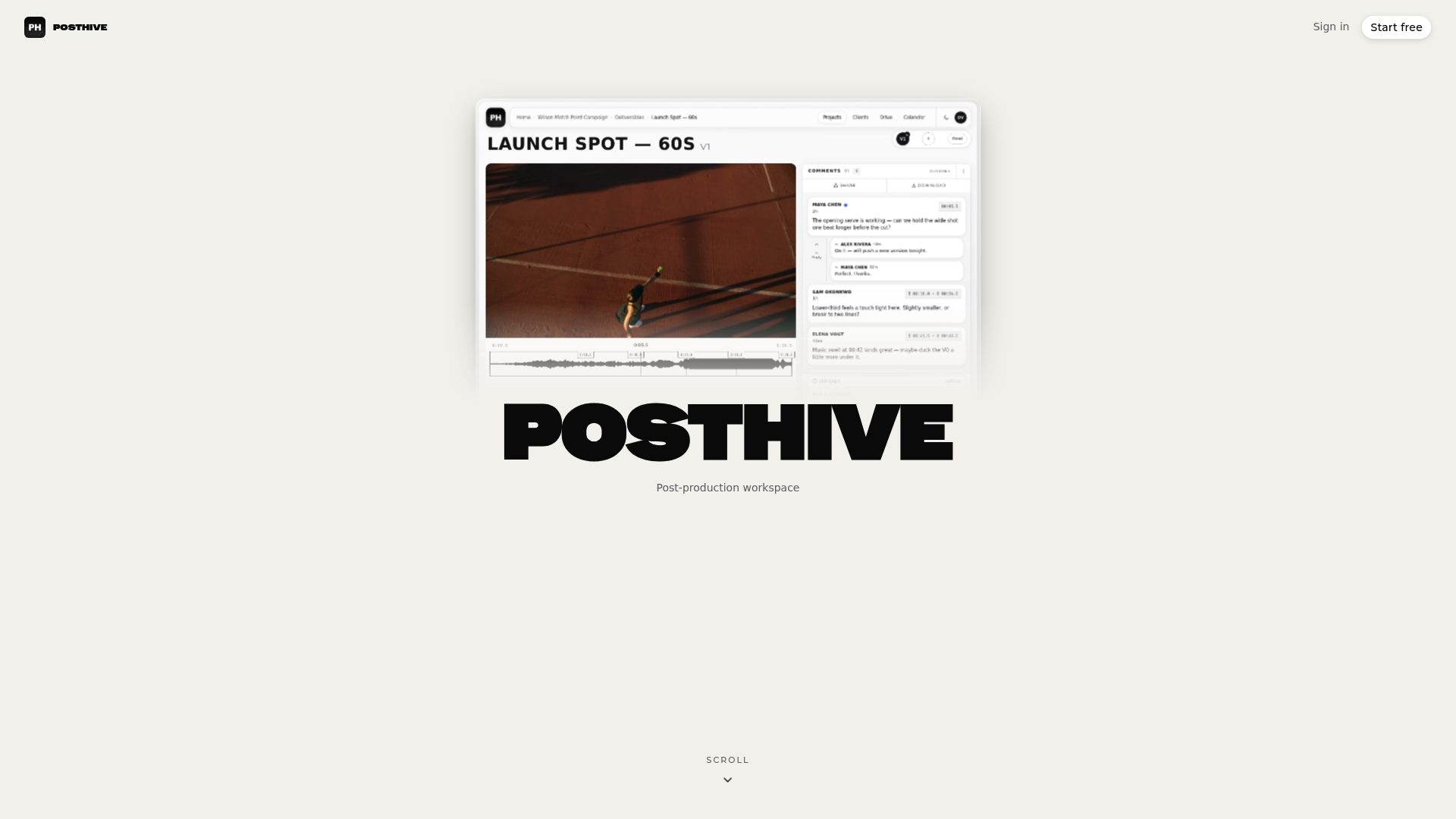
That client-ownership model matters specifically for the “first win” stage: a client can open the workspace, see the rough cut or concept sketch waiting for review, and approve or comment without a single forwarded email attachment. Task tracking maps directly to the checklist owners from Stage 3 onward, and calendar integration keeps the Stage 4 setup work from becoming a manual scramble. Plans allow multiple users, including clients, access to the workspace without additional per-seat charges beyond the subscription fee.
If the onboarding structure in this article sounds like what your studio needs but doesn’t have yet, compare the Pro and Enterprise plans on the pricing page and start a workspace with your next signed client.
Sources
- Client Onboarding Benchmarks 2026: Top vs. Bottom Performers (OnboardMap)
- Client onboarding best practices for B2B SaaS implementation teams in 2026 (Rocketlane)
- Driving success in complex projects (PMI)
FAQ
What Are the Steps in Client Onboarding?
The core steps are confirming the contract and deposit, collecting intake information and brand assets, holding a kickoff call with a written recap, setting up the project workspace, and delivering an early win. A tool like Posthive can host most of these steps inside a single workspace, from intake through client-facing review.
What Are the 5 Stages of the Onboarding Process?
The five stages are confirm, collect, kickoff, set up, and first win, each with a named owner and a clear “done” condition. Top firms compress this into roughly five days, with a first deliverable following within 7 to 14 days.
What Are the 4 C’s of Successful Onboarding?
Definitions vary across sources, but a common version centers on clarity, communication, connection, and confirmation, each addressing a distinct risk in the early client relationship. Clarity covers scope and ownership, communication covers cadence, connection covers rapport-building rituals, and confirmation covers milestone check-ins.
How Long Should Creative Client Onboarding Take?
Top-performing agencies complete the full onboarding sequence in about five days and deliver a first tangible piece of work within 7 to 14 days of signing. Compressing this further for small projects is reasonable, but skipping the kickoff recap step at any project size tends to create confusion later.
How Much Does Posthive Cost?
Posthive offers a Pro plan at $49 per month and an Enterprise plan at $99 per month, both with unlimited free seats for team members and clients. Current features and any trial terms are listed on the pricing page itself.