4 Channels That Actually Pay Freelance Post Production Editors
4 Channels That Actually Pay Freelance Post Production Editors

The best freelance post production leads come from four channels: marketplaces like Fiverr and Upwork for fast gigs, niche boards like ProductionHUB for bigger budgets, job sites like LinkedIn and Indeed for retainers, and direct outreach for stability. If you need cash this week, pitch three fresh marketplace listings today. If you want steady income, spend an hour updating your showreel and set job alerts on LinkedIn instead.
TL;DR:
- ProductionHUB offers higher-budget, production-company-sourced gigs, while marketplaces like Fiverr and Upwork focus on volume and quick turnaround projects.
- Freelancers should price projects based on realistic hours, add overhead and revision buffers, and request deposits to ensure stable income.
- Winning clients involves quick responses, targeted showreels, clear proposals, and proposing retainers after initial successful jobs.
- Efficient workflows that minimize revisions and use professional review systems can significantly increase effective hourly rates.
- Timely delivery, clear scope, and proper contract terms help avoid scope creep, protect rights, and ensure smooth project completion.
Table of Contents
- Where do freelance post production jobs actually show up?
- What should you charge for freelance post production work?
- How do you win freelance clients on a crowded platform?
- Workflow habits that let you charge more
- What deliverables and contract terms should you expect?
- Building a freelance post production business that doesn’t burn you out
- Try Posthive to cut revision rounds and protect your versions
- Sources
Where do freelance post production jobs actually show up?
Every channel has a personality. Marketplaces move fast and pay per gig. Niche boards move slower but pay better. Job sites reward patience with contracts that last months, not days.
- ProductionHUB functions as a crew and vendor directory built specifically for production and post-production work, and it tends to surface higher-budget, production-company-sourced gigs than general marketplaces. If a local production house needs a colorist for a three-day shoot, this is often where they post it, not Fiverr.
- Fiverr, Upwork, and Freelancer.com are volume plays. Upwork alone lists thousands of open video editing and post-production roles at any given time, ranging from $50 social clips to multi-thousand-dollar documentary packages. These platforms reward packaged offers and fast responses over long resumes.
- LinkedIn Jobs and Indeed skew toward agencies and production companies hiring for ongoing work. LinkedIn regularly features remote post-production roles and contract positions in major metro markets, and Indeed aggregates hundreds of similar listings you can filter by remote status.
- Facebook groups, Reddit communities, and industry Discord or Slack servers carry speculative leads before they hit formal boards. Someone posts “need an editor by Friday” and the first solid reply usually gets the job.
- Direct outreach to production houses and agencies is slower to convert but produces the most stable income. A short, specific email to a small agency’s post-production lead, sent when they’re clearly overloaded, often beats a hundred cold applications.
What should you charge for freelance post production work?
Pricing in this field breaks into three models, and most listings across freelance job boards fall into one of them: project-based flat fees, hourly or daily rates, and retainers. Freelancers who quote fastest tend to win the job, and responding to inquiries within 24 hours is standard practice among active professionals.
Building a project quote is simpler than most new freelancers assume:
- Estimate total hours the edit will realistically take, not the optimistic version.
- Multiply by your hourly rate.
- Add overhead: software licenses, storage, render time.
- Add a revision buffer, usually 10 to 15 percent of the base cost.
- Add licensing or stock footage/music fees if the project needs them.
Retainers make sense once a client needs recurring deliverables, like weekly social edits for a brand. Structure them with a fixed monthly deliverable count, a guaranteed minimum number of hours, and a 30-day notice period before either side can walk away.
Pro Tip: Always require a deposit before starting, cap revisions at two rounds in writing, and charge separately for rush turnarounds. Clients respect firm numbers far more than vague “let’s work something out” pricing.
How do you win freelance clients on a crowded platform?
Winning gigs is less about talent and more about removing friction for a client scrolling through fifty applications.
- Keep your showreel to 30 to 90 seconds, and cut it by skill, not by project. A colorist needs a color reel, not a general highlight tape.
- Include role-specific samples: a sound mix clip, a color grade before/after, a rough-to-final edit comparison.
- Write proposals with one clear value line up front, then list deliverables, timeline, and price without burying the client in paragraphs.
- End every proposal with a specific call to action, like a 15-minute call or a short sample edit, instead of “let me know if interested.”
- Quote within 24 hours. Freelancer profiles that emphasize fast turnaround and packaged pricing convert noticeably better than ones listing every tool they’ve ever touched.
- Turn one-off clients into retainers by proposing a monthly package with priority turnaround baked in, once you’ve delivered two or three solid jobs for them.
Workflow habits that let you charge more
Clients don’t pay premium rates for talent alone. They pay for fewer headaches. Version chaos, scattered feedback in email threads, and unclear approval status cost everyone time, and time is the one thing a freelancer can’t get back.
A workspace built around time-stamped comments, side-by-side version comparison, and secure media delivery cuts the back-and-forth that eats into your margin. Add task tracking and transcription for approvals, and a client can sign off from their phone instead of hunting through a Dropbox folder for “final_v7_ACTUALFINAL.mp4.”
A freelancer who can say “expect two review rounds, not four” in a proposal is quoting from a system, not a hope. That’s the difference between a $40 hourly rate and a $75 one.
Pro Tip: Mention your review process by name in the proposal. “You’ll get a private review link with time-stamped notes” sounds more professional than “I’ll send you the file for feedback.”
What deliverables and contract terms should you expect?
Timelines vary by deliverable, and setting them early protects you from scope creep before it starts.
- Social clips: 1 to 3 days.
- Short-form edits (under 10 minutes): 2 to 5 days.
- Long-form edits (documentary, corporate video): 1 to 3 weeks.
- Audio cleanup and mixing: 1 to 3 days.
Every contract, even a one-page one, needs a scope of work, a specific deliverable list, a revision limit, a deposit and payment schedule, ownership and usage rights, and a kill fee if the client cancels mid-project. Charge extra for rush requests and anything outside the original brief, and archive final project files for at least 90 days after handoff in case a client needs a re-export.
Building a freelance post production business that doesn’t burn you out
Most freelancers spend too much time hunting for the next gig and not enough protecting the ones they already have. A rough split of 30 percent prospecting and 70 percent delivery keeps the pipeline full without starving current clients of attention.
Packaged offers and small retainers smooth out the feast-or-famine cycle that defines marketplace work. And every hour saved through a tighter review workflow is an hour you can bill somewhere else, which quietly raises your effective hourly rate without raising your quoted one.
— Lorenz
Try Posthive to cut revision rounds and protect your versions
Posthive gives freelance editors the same version control and review speed that production companies expect from in-house teams, without the overhead of running one yourself.
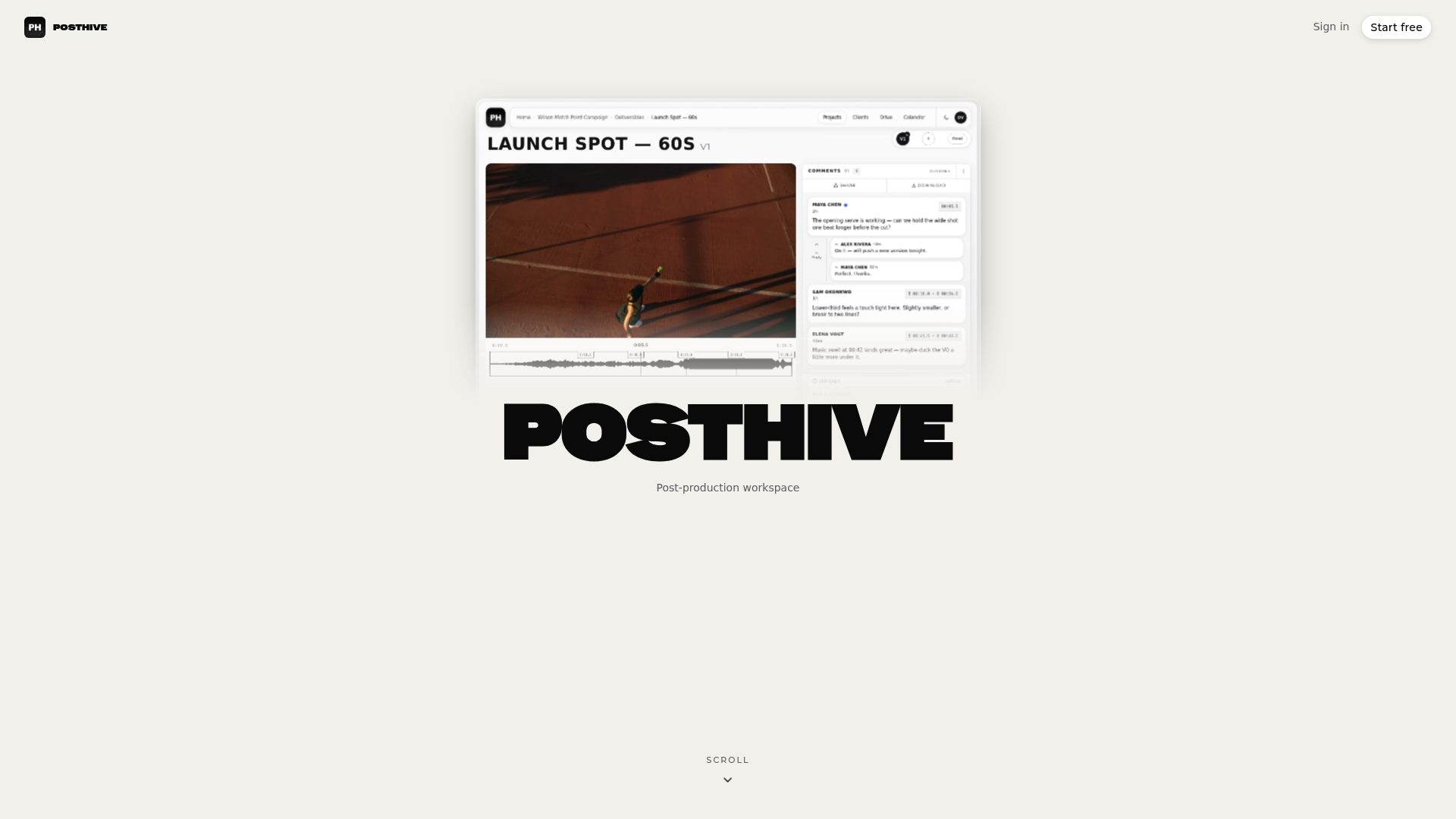
It centers on a few things that map directly to what clients complain about most: clear version history so nobody edits the wrong cut, time-stamped client review so feedback lands in one place instead of three email threads, task tracking so deadlines don’t slip silently, and secure delivery so final files reach the client without a shaky Dropbox link. Fewer revision rounds mean faster signoffs, and faster signoffs mean you can take on the next job sooner. If your current process still runs on email attachments and “final_v3” file names, try Posthive and see how much of that friction disappears on your next project.