Metadata First Frame.io Migration for Editors: Keep Comments & Markers
Metadata First Frame.io Migration for Editors: Keep Comments & Markers

Migrating from Frame.io is a practical move for any team hitting integration failures, rising seat costs, or data control concerns, and it can be done with minimal downtime if you follow a metadata-first sequence: audit, export, transfer, rebuild integrations, then validate. There are platforms designed to help teams keep version control and comment history intact during such a migration.
TL;DR:
- Successful migration depends on owners being assigned, a thorough inventory being completed, and metadata being exported before file transfer begins.
- Preserving comment timestamps and markers requires structured sidecar files and may need keyframe indexing to ensure accuracy during import into new platforms.
- Rebuilding integrations, plugins, and review workflows is prone to failure if OAuth, endpoints, or automation scripts are not updated and tested beforehand.
- Large archives benefit from matching transfer methods to size, with cloud tools for smaller projects and physical drives for multi-terabyte data, while maintaining folder hierarchy.
- Running a full test migration on a single project with sign-off ensures accuracy and reduces risk before a final cutover and extended rollback window.
Table of Contents
- Migration Checklist: The Step-by-Step Plan
- How to Audit Your Frame.io Account Before Migrating
- Exporting Files, Versions, Comments, and Timeline Markers
- Rebuilding Integrations and Review Workflows
- Large File Transfer and Storage Strategies
- Testing, Cutover, and Rollback Plan
- What Actually Slows Teams Down During Migration
- How Posthive Handles the Move After Frame.io
- Sources
Migration Checklist: The Step-by-Step Plan
A migration that goes sideways almost always fails at the same point: nobody owned the metadata. Files copy fine. Comments and markers get lost because nobody assigned a single person to protect them.
Here’s the sequence that works, roughly in order of execution:
- Assign owners for the migration and set a communication window so reviewers know when links will change.
- Inventory everything — projects, version stacks, active reviewers, connected integrations, webhooks, and any NDA-restricted assets.
- Choose your export method (bulk UI download versus API pull) based on volume and metadata needs.
- Export assets and metadata together, keeping comments and markers linked to their source files, not orphaned in a spreadsheet.
- Stage files into new storage, preserving folder structure and version relationships exactly as they existed.
- Rebuild integrations — NLE plugins, webhooks, and marker imports — before you touch a single live review.
- Validate, cut over, and archive the old Frame.io account as read-only for a rollback window.
Most mid-sized teams can execute this in several weeks of part-time effort spread across a producer and one technical lead.
Pro Tip: Do the metadata export before the file transfer, not after. If comments and markers are already mapped to a stable file structure, the file copy becomes a mechanical task instead of a scramble to reattach lost context.
How to Audit Your Frame.io Account Before Migrating
Skipping the audit is how migrations blow past their timeline. Before exporting anything, build a real inventory:
- List every project and tag it active or archived, so you’re not paying to transfer footage nobody will touch again.
- Calculate total storage across all projects to budget transfer time and destination storage tier.
- Map every connected integration, plugin, and webhook, and flag any that already show signs of breaking under Frame.io’s newer API.
- Document reviewer and client permissions, since anonymous review links behave differently than authenticated ones and won’t map one-to-one to a new platform.
- Flag any NDA-covered or proprietary content that carries transfer restrictions, since some client contracts limit where footage can live.
This audit typically takes a single producer two or three days for an account with a few dozen active projects. Skip it, and you’ll discover the gaps mid-transfer, which is the expensive way to find them.
Exporting Files, Versions, Comments, and Timeline Markers
The technical work splits into two tracks: moving the media, and preserving everything attached to it. Most teams underestimate the second track.
- Bulk UI download works for small archives but strips a lot of structured metadata along the way.
- API export preserves more context but requires engineering time, especially given recent platform changes.
- Frame.io’s V4 redesign requires OAuth2.0 through the Adobe Developer Console and changes core terminology (assets become files and folders, teams become workspaces), which breaks older automation scripts that assumed Legacy endpoints.
- Export comments and timestamps into structured JSON or CSV sidecar files rather than letting them live only inside the platform.
- Marker fidelity is the real trap: browser-based comment timestamps don’t always align to exact video frames, and naive exports can drift by a frame or more.
One practitioner who rebuilt this pipeline after Frame.io’s V4 launch found that browser comment timestamps needed a keyframe index and nearest-keyframe seeking to guarantee frame-accurate playback when comments got imported into an NLE. Without that step, editors were manually re-checking every marker against the timeline. Keep metadata in a structured sidecar file tied to a stable file ID, and your destination workspace can import markers without re-encoding a single clip.
Rebuilding Integrations and Review Workflows
Integration breakage is where most migration timelines actually blow up, not the file transfer. Plan for it explicitly.
- Check whether your NLE plugin has a native equivalent in the new platform. If not, budget time for a manual metadata import step.
- Recreate webhooks and API automations under the new OAuth flow and updated endpoint schemas, since old scripts pointed at endpoints that may no longer exist.
- Test reviewer invites separately for anonymous links and authenticated accounts. They fail differently and clients notice immediately when a link stops working.
- Write down any manual step an editor now has to perform that used to happen automatically, so nobody discovers it mid-deadline.
Pro Tip: Run one full review cycle on a dummy project before touching live client work. If a comment doesn’t land on the right frame in that test, it won’t land correctly on the real cut either.
Large File Transfer and Storage Strategies
Storage strategy determines whether your migration takes days or weeks. Match the transfer method to the archive size, not the other way around.
- Cloud-to-cloud transfer tools handle most active project libraries efficiently without routing everything through a local machine.
- For multi-terabyte archives, shipping a physical drive is still a common workaround when bandwidth would otherwise take days.
- Preserve folder structure and version stacks exactly, since flattening them during transfer is one of the most common causes of post-migration confusion.
- Split storage into an active workspace tier for current projects and a cheaper long-term archive tier for anything closed out.
Estimate cost by multiplying your total archive size against your destination storage tier’s rate, then add a buffer for the active workspace tier, which usually runs higher per gigabyte than cold archive storage.
Testing, Cutover, and Rollback Plan
Don’t cut over on faith. Run the sequence below before you tell clients the switch is final:
- Migrate one real project as a dry run and manually verify every comment and marker lines up with the correct frame.
- Get sign-off from the editor, the producer, and one client-side reviewer before declaring it done.
- Schedule a final sync window, then notify all reviewers of the new review link at the same time.
- Keep Frame.io in read-only mode for at least two to four weeks as a rollback safety net before canceling anything.
What Actually Slows Teams Down During Migration
Integration breakage eats more time than the file transfer itself. Teams that treat DaVinci Resolve plugin failures as an afterthought lose days rebuilding what could have been mapped in an afternoon with a metadata-first plan. Pricing is a real driver too. Agencies that moved off Frame.io over reviewer-seat costs usually saved the most by rethinking how many people actually needed a paid seat versus a review link.
The pattern worth internalizing: structured exports save editors from re-doing work by hand. A sidecar file with comments and markers attached is worth more than any single feature the destination platform offers.
— Lorenz
How Posthive Handles the Move After Frame.io
Some platforms aim to keep version history and comment threads intact to reduce manual reconstruction, which can save significant editing time after a migration.
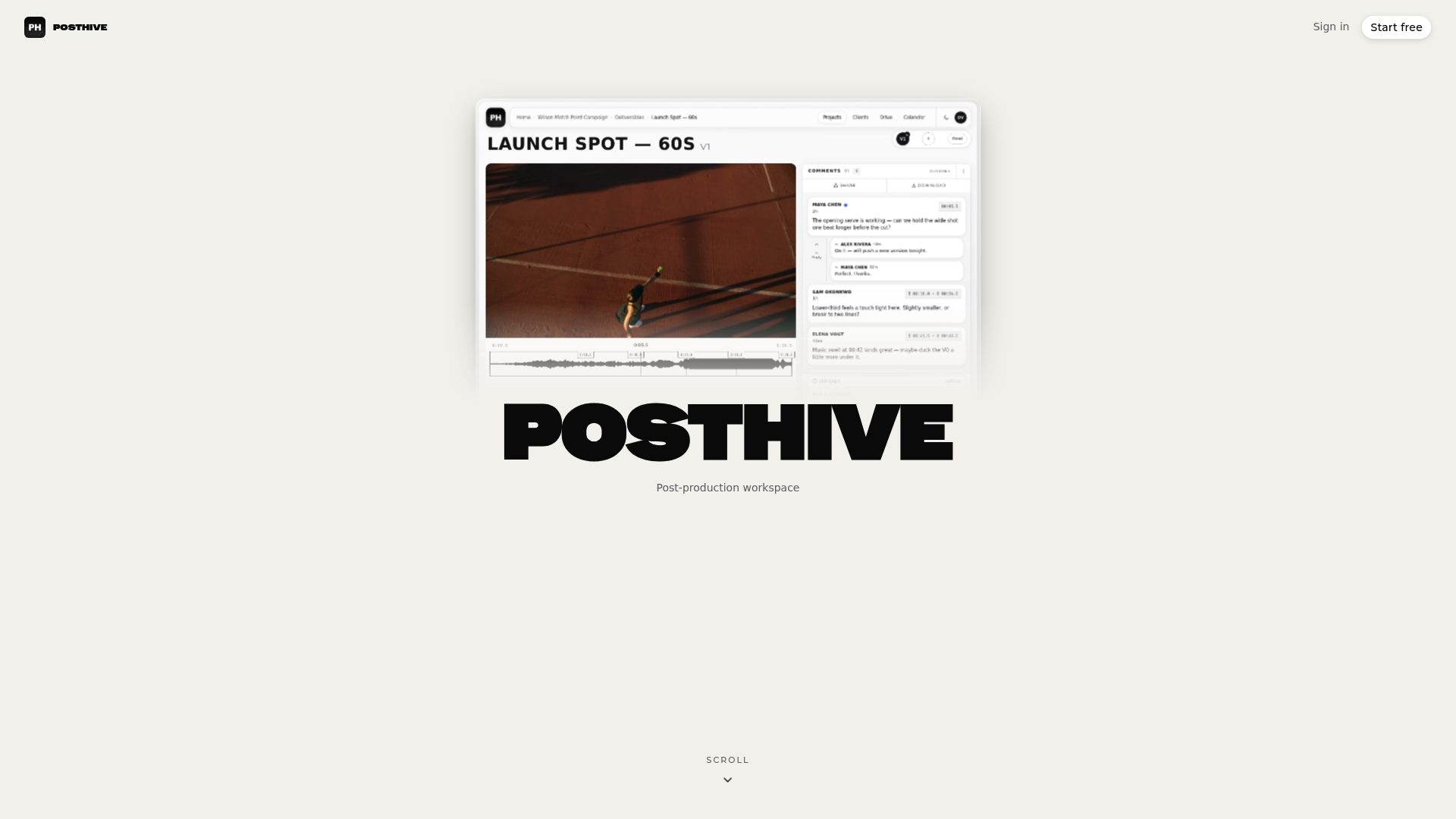
Version control can maintain cuts tied to their comment history, so reviewers maintain context when projects move between drafts. Task tracking and cloud connectivity can help producers reassign work and monitor deadlines without separate spreadsheets. For teams rebuilding client-facing reporting after leaving Frame.io, pairing Posthive with a tool like Paid Lens for client summaries covers the reporting gap cleanly. If your review cycles have been slower since the switch, read through Posthive’s creative ops workflow guide and then start a workspace at Posthive to see how version and comment continuity holds up on a real project.
Sources
- Frame.io Legacy API to V4 Migration Guide
- I Replaced Frame.io for My Video Production Company — Here’s the Architecture I Used
- Why Our Video Agency Switched from Frame.io to Krock.io (and Saved Thousands)
- Best Frame.io Alternatives for Video and Creative Teams in 2026