Post Production Handoff for Remote Teams: 30 Minute Test Export
Post Production Handoff for Remote Teams: 30 Minute Test Export

A successful post production handoff means the receiving editor gets verified media, complete metadata, a written manifest, and a named point of contact who has signed off on acceptance criteria before the outgoing team steps away. The immediate next step is simple: run a handoff checklist and confirm both the named receiver and a short overlap window where the two editors can test the project together. Everything else, from folder structure to codec choices, exists to support that one handshake.
TL;DR:
- Sending the wrong type of file, such as media instead of edit decision lists, causes most interchange failures, highlighting the importance of matching formats to job roles.
- Confirming that proxies, originals, and project files have consistent naming conventions and verified checksums reduces relink issues and maintains project integrity.
- Holding a test open or export during a short overlap window ensures technical issues are identified before the outgoing editor departs, preventing costly rework.
- Assigning clear roles and using a checklist with evidence like checksums and signed acceptance criteria prevents ambiguous handoff completion and accountability loss.
- Cloud workflows require secure, permissioned access and detailed asset tracking, but physical drives may still be necessary for high-resolution footage.
Table of Contents
- Building a post production handoff checklist you can use today
- Getting the technical handoff details right
- Mapping the timeline from ingest to delivery
- Defining roles, tollgates, and takeover rules
- Choosing tools for cloud and camera-to-cloud workflows
- How a unified workspace runs this checklist in practice
- What most teams get wrong about handoffs
- Making the checklist easier to run with Posthive
- Where to go deeper on interchange formats and workflow structure
- Sources
- FAQ
Building a post production handoff checklist you can use today
A handoff succeeds or fails on preparation, not improvisation. The seven-stage structure that governs most post production workflows, from ingest through delivery, breaks down fastest at the exact moment one team passes work to another, and distributed teams with heavy review cycles see that gap widen further.
Before sending anything, assign a named receiver, not a department or a shared inbox, and write down what triggers the handoff and what counts as acceptance.
Deliverables inventory:
- Canonical filenames following a fixed naming convention, with no ad hoc renaming mid-project.
- File sizes and checksums for every asset, so the receiver can verify nothing corrupted in transit.
- A status column marking each item as final, temp, or pending replacement.
Media and project files:
- Proxies and originals, each labeled with ingest notes and timecode ranges.
- Project files exported as XML or EDL when decisions matter most, or AAF when the mixer needs embedded audio stems.
- A dependencies list covering plugins, fonts, LUTs, and any templates the timeline references.
The full sequence looks like this:
- Freeze the outgoing edit and create a protected copy before touching anything else.
- Assemble the deliverables inventory and dependencies list.
- Package proxies, originals, and interchange files matched to what the receiver actually needs.
- Run a test open and a representative test export.
- Hold a short overlap window with the outgoing editor still reachable.
- Confirm acceptance against written criteria, then schedule a 30-day review.
Pro Tip: Never call a handoff complete until someone has test-opened the project on the receiving system, not just confirmed the files arrived.
Centralizing this checklist instead of scattering it across email threads closes most of the gaps that cause rework, since manifest and version tracking kept in one place prevents mismatched filenames and lost approval history. Build in a support window after handover, not just a single sign-off moment, so small issues surface while the outgoing team can still answer questions.
Getting the technical handoff details right
Most handoff failures trace back to one mistake: sending the wrong kind of file for the job. Edit decisions belong in EDL or XML. Audio media, especially when a mixer needs individual stems, belongs in AAF or OMF. Mismatching these two categories is one of the most common causes of interchange breakdowns, and embedding media into a project file should only happen when the receiver specifically asks for it.
Proxy strategy matters just as much as format choice. Keep timeline structure and timecode identical between proxies and full-resolution media, so relinking later is a swap, not a rebuild.
Relink and compatibility rules:
- Use relative paths where the NLE supports them, so a folder can move without breaking every link.
- Apply one canonical naming convention across proxies, originals, and exports, no exceptions.
- Verify checksums after transfer, before anyone opens the project.
- Confirm NLE version, plugin list, LUT set, and font availability between sender and receiver machines.
- Note operating system differences that affect font rendering or codec support.
A short overlap window, where the incoming editor test-opens the project while the outgoing editor stays reachable, resolves most technical handoff problems quickly, according to workflow guidance on the handover process. That single practice catches effects that dropped out, transitions that went missing, and audio that came in offline, all before the outgoing editor disappears from the project.
Test for these failure modes specifically: open the project cold on the receiving machine, scrub through every reel or sequence, and export a short representative clip covering at least one transition, one effect, and one audio mix point. If any of those breaks, you found the problem while it was still cheap to fix.
Mapping the timeline from ingest to delivery
Post production runs on a predictable milestone map, even when the details of each project differ. Ingest and organization happen first, followed by assembly, fine cut, picture lock, then parallel finishing work in color, sound, and visual effects, then quality control and delivery.

The critical path runs through picture lock, since nothing downstream should start in earnest until that freeze happens. Once it does, color and sound can proceed simultaneously because they rarely touch the same files, which is where distributed teams recover the most time.
Picture lock is the trigger point for a major handoff moment: colorists need full-resolution media and a locked reference, composers need a locked cut with temp music removed, and sound editors need stems or a clean dialogue pass, each packaged separately rather than bundled into one generic export, since delivering mismatched assets at picture lock creates rework that a few extra minutes of packaging would have avoided.
For distributed teams, gate reviews at each milestone rather than waiting until the end, and keep overlap windows short: a 30-minute test-export review beats a full day of back-and-forth email.
Defining roles, tollgates, and takeover rules
Every handoff needs three named roles: the sender, who prepares the packet, the receiver, who accepts it, and an acceptance owner, who signs off that criteria were met. When the same person plays two of these roles, accountability quietly disappears.
- The sender completes the deliverables inventory, dependencies list, and test export before requesting sign-off.
- The receiver test-opens the project, checks against the written acceptance criteria, and flags anything missing.
- The acceptance owner reviews the evidence, checksums, test export, and dependency confirmation, and formally closes the tollgate.
- Unresolved items get logged in a shared document rather than quietly worked around.
A tollgate is not a conversation, it is a checklist with evidence attached: a checksum match, a successful test export, and a confirmed dependency list. Without that evidence, “looks fine” is not acceptance.
Takeover rules prevent a second, quieter kind of failure: two editors working the same master timeline at once. Keep one active editor per master file, number versions consistently, and route any change request through a single protocol rather than ad hoc messages.
Pro Tip: Log exceptions in writing even when they seem minor. An unresolved font substitution today becomes an unsolvable mystery three weeks later.
Exception handling matters because not every issue blocks a handoff. Log it, assign an owner, and set a date to revisit, rather than closing the tollgate on a false “complete.”
Choosing tools for cloud and camera-to-cloud workflows
Camera-to-cloud setups let authorized collaborators begin reviewing footage while production is still shooting, which catches continuity or technical problems days earlier than waiting for physical media to arrive. The tradeoff is setup time and a dependency on reliable upload bandwidth on set.
Whatever platform a team chooses, a few features matter more than the rest:
- Streaming proxies that let reviewers watch footage without downloading full files first.
- Timecode-anchored comments, so feedback attaches to a specific frame, not a vague description.
- Granular permissions, so a client sees only what they should.
- An asset manifest and audit log that record who touched what and when.
Security deserves specific attention at handoff time. Rotate shared credentials once a project changes hands, and revoke access for anyone who no longer needs it, rather than leaving old logins active indefinitely.
Cloud workflows do not replace physical delivery entirely. High-bandwidth camera-original footage still often ships on drives, with cloud dailies handling review in the meantime, a hybrid approach that balances speed against practicality.
How a unified workspace runs this checklist in practice
A workspace built around post production can automate the parts of this checklist that otherwise live in scattered spreadsheets: version history, task ownership, and manifest records in one place instead of three.
- Version control that flags which cut is current, so no one works from a stale timeline.
- Task tracking that assigns deliverables inventory and dependency checks to named owners.
- A shared record of test exports and acceptance evidence, visible to sender and receiver alike.
- Client-facing deliverable ownership, so approvals happen against a single source of truth.
Inside a post-production tool, a transfer packet becomes a workspace folder with the manifest, dependencies list, and test export attached directly to the task, so the tollgate check happens against a visible record rather than a buried email thread.
What most teams get wrong about handoffs
The biggest handoff failures I have seen are not technical. They are cultural: no named receiver, no protected milestone, no overlap test. A five-minute test-open would have caught most of the disasters that instead surfaced three days later.
Treat every handoff as a continuity check, not a file transfer, and extend the outgoing editor the same courtesy you would want: clear notes, a reachable window, and credit for the groundwork they laid.
— Lorenz
Making the checklist easier to run with Posthive
Posthive centralizes the manifest, version history, and task ownership this checklist depends on, so a tollgate check takes minutes instead of a scavenger hunt through email and shared drives.
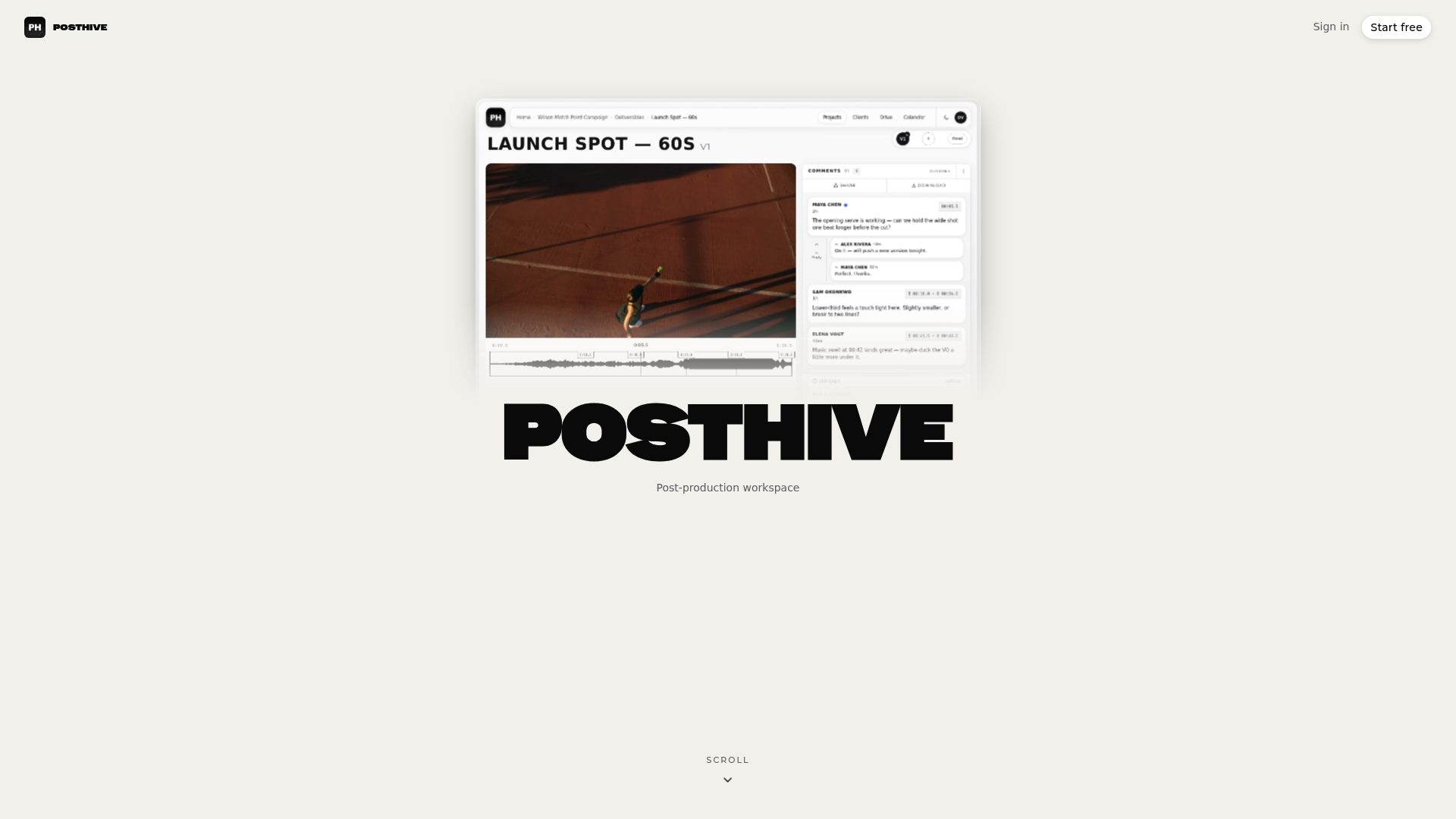
- Every deliverable, dependency, and test export lives on one task, with a named owner attached.
- Client-facing version ownership means approvals happen against a single current cut, not a guess.
- Plans with free seats allow the receiver, the client, and the finishing team to see the same record without extra per-seat cost.
If you want to see how a workspace structure supports this kind of handoff, check Posthive’s pricing and try building your first transfer packet.
Where to go deeper on interchange formats and workflow structure
For more on formats and stage-by-stage structure, the post production workflow guide and seven-stage breakdown cover the technical detail this article summarizes. For scheduling method comparisons relevant to milestone planning, see this project management methods overview.
Sources
FAQ
What are the three phases of postproduction?
Postproduction is commonly grouped into three broad phases: editorial (ingest through picture lock), finishing (color, sound, and visual effects), and delivery (quality control and final export). Some breakdowns split these further, but the underlying grouping stays consistent across most workflows.
Which are the five steps of post-production?
A common five-step version covers ingest and organization, assembly and editing, picture lock, finishing, and delivery, though some guides expand this into seven stages by separating review cycles and backup as their own steps. The exact count varies by source, but the sequence of work stays the same.
What are some examples of post-production work?
Post-production work includes editing footage into a cut, color grading, sound design and mixing, visual effects compositing, and preparing final deliverables for distribution. It also covers the coordination tasks around that work, like version tracking and client review.
What does post-production mean?
Post-production refers to everything that happens to footage after filming wraps, from ingest and editing through finishing and final delivery. It is distinct from production, which covers the actual shoot.
When should a project be considered picture locked?
A project is picture locked once the edit is frozen and no further structural changes will be made, which triggers the handoff to color, sound, and visual effects. Locking early and clearly prevents the rework that comes from finishing teams building on a cut that later changes.