Six Step Studio Playbook for Production Deadline Tracking
Six Step Studio Playbook for Production Deadline Tracking

Production deadline tracking for post-production means assigning single owners to each deliverable, setting milestone dates with buffers, and automating reminders and approval records. It replaces guesswork with a system where every version, review cycle, and handoff has a name, a date, and a person responsible for it. The fastest way to make it dependable is to combine owner assignment with calendar sync and automatic notifications from day one.
TL;DR:
- Assign a single owner to each deliverable and use strict naming conventions for versions to prevent confusion and ensure accountability.
- Build in at least a one-day buffer for internal deadlines and automate reminders to minimize the risk of missed milestones.
- Synchronize calendars or Gantt charts across time zones and define clear escalation rules for overdue tasks to maintain schedule integrity.
- Use templates for recurring project types, such as short-form edits or episodic series, to streamline workflow and enforce deadline discipline.
- Centralize version control, approvals, and deadlines within a unified workspace to reduce chase-time and improve team coordination.
Table of Contents
- What production deadline tracking covers in post-production
- Key components of an effective deadline-tracking system
- Practical workflow patterns and templates for recurring projects
- Step-by-step implementation: rolling this into your team in six steps
- Common pitfalls and how to fix them
- Why simple deadline discipline beats complicated systems
- How a unified post-production workspace can help
- Further reading and practical templates
- FAQ
What production deadline tracking covers in post-production
Deadline tracking in post-production is not general task management. It covers version control (which cut is current and who touched it last), review-and-approval cycles (how many rounds a client gets and how long each takes), delivery packages (masters, proxies, captions, deliverable specs), and technical handoffs like transcodes and archive steps.
Context changes the rules. A short-form social edit might move through one review round in 48 hours, while an episodic series needs rolling deadlines across dozens of episodes with staggered signoffs. Commercial launch work often has a fixed air date that cannot slip, which puts pressure on every earlier milestone.

Post-production needs its own deadline logic because files are large, reviews take real time to watch and annotate, and teams often work across time zones with clients who reply overnight. A generic project tool rarely accounts for any of that.
Key components of an effective deadline-tracking system
A working system rests on a handful of rules, not a long list of features. Most breakdowns trace back to one of these being missing or ignored.
- Naming and version rules tied to ownership: every file name should indicate the version number and the person who last approved it, detailed further in this practical guide to version tracking.
- Milestone definitions and gating logic: first cut, client review, signoff, and final delivery each need a clear date and a rule for what happens if the prior step is not done.
- Task-level owners, due dates, and buffers: one person per deliverable, with a buffer of at least a day built into every internal deadline.
- Calendar and Gantt sync with timezone handling: shared timelines that update automatically, discussed in more depth in this overview of production Gantt charts.
- Automated reminders and escalation rules: a reminder before the deadline, and an escalation path when it is missed.
- Approval logs and secure delivery handoffs: a record of who approved what and when, tied to the actual file delivered.
Pro Tip: Put the owner’s name in the task title, not just the assignee field. It shows up in every notification and calendar view, which cuts down on “who has this” messages.
Practical workflow patterns and templates for recurring projects
Most post-production teams run a small number of project types on repeat. Building a template for each one removes the need to reinvent the schedule every time.
- Short-form edit template: rough cut due day 1, internal review same day, client review within 24 hours, one revision round, final delivery by day 3, with a half-day buffer before the deadline.
- Episodic template: rolling deadlines per episode, gated so episode 3 cannot enter review until episode 2 is signed off, with a shared calendar showing all episodes at once.
- Commercial or launch template: a strict two-round approval window, a locked final cut date at least 48 hours before air, and a packaging checklist for every required deliverable format.
Each template should specify which calendar or Gantt rules apply, how many reviewers can be active at once, and the version naming convention to use. A full folder and timeline structure for this is laid out in this post-production calendar template.
Step-by-step implementation: rolling this into your team in six steps
Setting up deadline tracking does not require a new tool overnight. It requires six decisions made in order.
- Map every deliverable and assign one owner to each, no shared ownership.
- Set milestone dates with buffers, then publish the full timeline where the whole team can see it.
- Standardize version naming and storage rules so nobody has to ask which file is current.
- Integrate your calendar or Gantt tool and confirm every team member’s time zone is set correctly.
- Configure reminders, approval workflows, and escalation rules so missed deadlines trigger action automatically.
- Pilot the system on one project, collect feedback from editors and reviewers, and adjust before rolling it out wider.
This kind of rollout is easier when task ownership is already clear at the editor level, a topic covered in detail in this practitioner’s system for editor task tracking.
Pro Tip: Run the pilot on a project with a real client and a real deadline, not an internal test. Fake urgency never surfaces the same problems.
Common pitfalls and how to fix them
Most deadline slips in post-production trace back to a small set of recurring mistakes.
- Ambiguous ownership: fix it with a strict single-owner rule for every deliverable, no exceptions.
- Version chaos: enforce a naming convention and require a check-in step before any file is marked final.
- Calendar drift across time zones: standardize on one reference time zone for all deadline displays.
- Approval delays: set firm client response windows, automate reminders, and define what happens when a window is missed.
- Too many parallel reviews: stage review windows so only one or two reviewers are active on a version at a time.
Each of these is a process fix, not a tooling problem. The tooling only helps once the rule exists.
Why simple deadline discipline beats complicated systems

The teams I’ve seen move fastest are not the ones with the most detailed schedules. They are the ones where everyone knows, without asking, who owns the next step. Editor task tracking improves the moment ownership stops being shared, because a deliverable with two owners effectively has none.
Most of the friction in post-production comes from ambiguity, not from a lack of tools. A single owner, a published milestone date, and an automatic reminder solve more problems than another dashboard ever will. Templates for Gantt timelines and calendar structures on the Posthive blog are a reasonable starting point for teams building this out for the first time.
— Lorenz
How a unified post-production workspace can help
A workspace that centralizes versions, calendars, approvals, and handoffs removes the need to chase updates across separate tools. A unified workspace built around client ownership of deliverables means clients keep direct control over their versions while the whole team works from the same timeline.
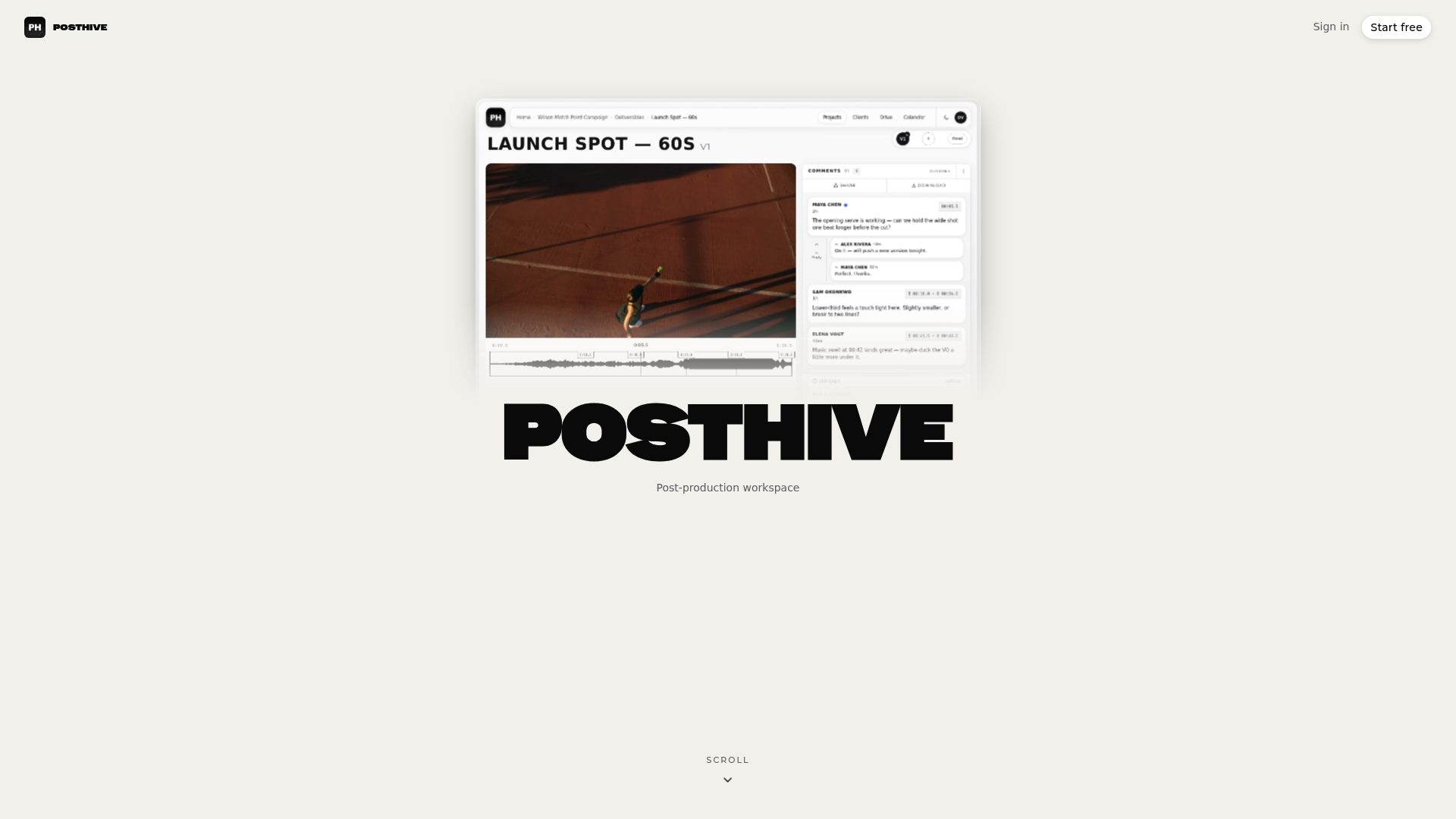
- Version ownership stays with the client, reducing disputes over which cut is final.
- Task tracking and calendar integrations, including Google Calendar sync, keep deadlines visible without manual updates.
- Unlimited free seats on every plan mean clients and reviewers can join without extra per-seat cost.
Compare Pro and Enterprise plans or visit Posthive to see how the workspace fits your team’s delivery schedule.
Further reading and practical templates
For deeper how-tos, the Posthive blog covers review workflows, checklists, and calendar structures in more detail, including this post-production checklist and creative ops workflow guide. For broader process design across multi-format campaigns, Preferic’s content marketing services offer an agency perspective on cross-team visibility.
FAQ
What is production deadline tracking in post-production?
It is the practice of assigning owners, milestone dates, and buffers to every version, review cycle, and delivery package in a post-production project. The goal is to know exactly who is responsible for the next step at any given time.
How do I track multiple client review rounds without losing versions?
Use a strict naming convention tied to version number and approver, paired with a mandatory check-in step before any file is marked final. A dedicated version tracking guide walks through the naming rules in more detail.
What is the best way to prevent missed delivery deadlines?
Build a buffer of at least a day into every internal milestone and automate reminders ahead of each deadline. Pair this with an escalation rule so a missed deadline triggers a specific next action rather than silence.
Should Gantt charts or calendars be used for post-production timelines?
Either works, as long as it syncs across the team and handles time zones consistently. Many post-production teams use both, a Gantt view for dependencies and a calendar for day-to-day deadline visibility, as shown in this production Gantt chart guide.
How does Posthive help with deadline tracking?
Posthive centralizes version control, task ownership, and calendar sync in one workspace, with clients retaining ownership of their deliverables throughout the process. Plans include unlimited free seats, so reviewers and clients can join without added per-seat cost.