Six Phase Video Translation Workflow Checklist for Production Teams
Six Phase Video Translation Workflow Checklist for Production Teams

The video translation workflow that works: prepare assets, transcribe, translate and subtitle, localize graphics, dub or assemble, run QA, then deliver. Choose an AI plus manual hybrid when you need speed and volume across many languages, but insist on human translators and native reviewers for brand-sensitive scripts, legal disclaimers, or regulated content. Each language should end with a subtitle file, an SDH version, a localized master, and a delivery manifest.
TL;DR:
- Using locked glossaries and site-specific templates before translation begins prevents costly updates across multiple languages and clarifies terminology.
- Dial down subtitle characters per second for L2 audiences to improve comprehension and conduct small-scale testing to optimize timing for target viewers.
- Digitally tracking all assets with version control, clear naming conventions, and manifests reduces file mix-ups and ensures accurate, synchronized multilingual delivery.
- Combining cloud-based processing for speed and collaboration with local final dubbing and quality checks balances security and project efficiency.
- Implementing strict gate reviews at each phase helps detect delays early and prevents bottlenecks, especially around translation, dubbing, and final QA.
Table of Contents
- What you need before starting a video translation project
- The phase-by-phase production map for translating video
- How fast should subtitles move for viewers to keep up
- QA and technical compliance before you deliver
- Naming conventions and version control that prevent chaos
- Choosing cloud or local processing for each step
- Where Posthive fits into the translation workflow
- Building a schedule that keeps a multi-language project on track
- Connecting translation work to your video editing platform
- Keeping translators, editors, and engineers on the same page
- Adapting content for different cultures and regions
- Protecting sensitive footage and scripts during translation
- What experienced teams get wrong and how to fix it
- A practical next step for teams running these projects
- Where these workflow rules come from
- Sources
- FAQ
What you need before starting a video translation project
Most rework in localization traces back to missing assets or undecided specs at kickoff. Gather everything below before a translator or editor touches the project, and lock the decisions that affect every downstream phase.
- Master media in its original codec plus a lightweight proxy for review and remote collaboration.
- Separated stems: music and effects (M&E), dialog, and sound effects tracks, so dubbing does not require a full remix.
- Editable graphics and project files (title cards, lower thirds, motion graphics source files) for on-screen text replacement.
- A transcript or time-coded script, speaker notes, and any existing glossary or brand style guide.
- Locked decisions: target markets, subtitle and delivery formats, accessibility requirements, timeline, and budget ceiling.
Skipping the stems is the most common shortcut that backfires: without a clean M&E track, dubbing teams have to rebuild the mix from scratch, which adds days to a schedule that looked simple on paper. Decide accessibility requirements early too. If SDH is required for any market, that decision changes how you spot subtitles from the first pass, not as an afterthought before delivery.
The phase-by-phase production map for translating video
A video translation process breaks cleanly into six phases. Treat each as a gate: the next phase does not start until the current one passes review.
- Content audit and language selection. Confirm which languages are in scope, identify any legally sensitive lines (medical claims, financial disclaimers), and build a textless or layered master wherever the original project files allow it. A textless master lets you swap graphics per language without re-rendering the whole edit.
- Transcription and diarization. Run automatic speech recognition (ASR) to generate a first-pass transcript, then assign speaker labels. Clean the transcript by hand: fix proper nouns, remove filler words that ASR mishears, and spot-check timing against the audio every few minutes rather than trusting the raw output end to end.
- Translation with glossary lock. Machine translation gives you a fast draft; a human post-editor then applies your locked glossary and style guide, adjusts tone, and flags anything that does not translate cleanly (idioms, humor, regulatory phrasing). Lock terminology before translation starts, not during review, or you will pay for the same fix in five languages.
- Subtitle spotting and formatting. Time each subtitle to the audio, respect reading-speed targets (covered in the next section), and draft in SRT for internal review before converting to delivery formats like TTML or IMSC for platform handoff. Build the SDH version alongside the standard subtitle file since it needs additional cues for sound effects and speaker identification.
- Dubbing decisions. AI-generated voice works for internal training videos, low-stakes explainers, or fast-turnaround social content where cost and speed matter more than performance nuance. Human casting and studio recording remain the better choice for anything brand-facing, narrative, or emotionally driven, where an AI voice’s flat delivery would undercut the message. If you use voice cloning, get documented consent from the original speaker and disclose synthetic voice use where regulations require it. Record against the M&E stem so the final mix does not need to be rebuilt.
- Assembly and final render. Drop the localized audio and subtitle track onto the master, swap in localized graphics, and run a full watch-through in context, not just a review of isolated clips.
Pro Tip: Build your textless master and lock your glossary before translation begins. Both decisions are cheap to make once and expensive to unwind across multiple languages.
Each phase needs a named owner: a project lead who tracks status, a linguist or agency handling translation, an editor handling assembly, and a QA reviewer who signs off before delivery. Automation covers the repetitive parts (draft transcription, machine translation, rough subtitle timing), while humans handle judgment calls: tone, idiom, casting, and final approval.
How fast should subtitles move for viewers to keep up
Subtitle speed is usually measured in characters per second (CPS), and the number you pick directly shapes comprehension. Eye-tracking research on subtitle speed and video presence found that faster subtitles increase skipping and cognitive load, with second-language (L2) viewers affected more than native speakers of the subtitle language, since subtitle speed and video presence measurably change how viewers process text.
- Set a conservative default and adjust per audience rather than using one CPS number everywhere.
- Treat L2-heavy audiences as a signal to slow down, since faster speeds cost them more comprehension than native viewers.
- Avoid subtitles shorter than about one second on screen (sometimes called ghost subtitles), since viewers cannot register them at normal reading pace.
- Test with a small sample of target-language viewers before finalizing speed on a flagship or high-stakes project.
Slower is not always safer everywhere. One mixed-methods study found that dropping subtitle speed from 9 cps to 5 cps improved recall, lowered cognitive load, and increased enjoyment for the tested cohort of Chinese-language viewers, which suggests speed targets should flex by market rather than follow one global rule.
Run a lightweight test protocol: pull five to ten target-language viewers, show them a two-minute clip at your default CPS, then ask three questions afterward: what happened, what was confusing, and did they feel rushed. Adjust before you scale the timing decision across a full season or campaign.
QA and technical compliance before you deliver
Linguistic and technical QA are separate checks and both need a signed sign-off before a file leaves your team. Skipping either one is the fastest way to trigger a platform rejection or a client revision round.
- Sample a percentage of subtitle lines for bilingual review rather than reading every line at the same depth; concentrate reviewer time on the sections your glossary flagged as high-risk.
- Track recurring error categories (mistranslation, omission, timing drift, inconsistent terminology) so patterns surface across a whole season instead of getting fixed one clip at a time.
- Confirm subtitle timing sits within tolerance of the reference video, not just visually close.
- Check frame rate and timebase match the delivery spec exactly, since a mismatch here breaks sync even when the translation is correct.
- Confirm SDH includes sound effect cues and speaker labels, not just dialogue text.
Delivery specs from major platforms illustrate what “in tolerance” actually means in practice. Netflix’s branded delivery specifications require subtitle and SDH timing to generally conform within 0.5 seconds of the delivered proxy, and they call for accepted formats such as TTML1 and IMSC1.1 rather than accepting whatever format a vendor happens to export.
| QA check | What it verifies | Typical tolerance or format |
|---|---|---|
| Timing conformity | Subtitle sync to reference video | Within 0.5 seconds |
| Delivery format | File type accepted by platform | TTML1 or IMSC1.1 |
| SDH content | Accessibility completeness | Sound cues, speaker labels included |
| Linguistic accuracy | Translation and terminology fidelity | Bilingual reviewer sampling |
Naming conventions and version control that prevent chaos
Multi-language projects fail in predictable ways: a vendor overwrites the wrong file, a reviewer approves an outdated cut, or nobody can tell which of six similarly named files is current. A five-stage localization pipeline that separates source assets from vendor deliverables, paired with manifests and clear naming, closes most of these gaps before they start.
- Build filenames from consistent fields: project code, ISO 639-1 language code, content type, date, and version number, for example
PROJ042_es_MASTER_20260214_v3.mov. - Keep a manifest file with every deliverable, its checksum, expected duration, and language, and check incoming and outgoing files against it before anyone marks a task complete.
- Organize by language-per-folder or a hot-folder structure so a vendor working on Spanish never sees or touches German files.
- Batch related deliverables (subtitle file, dubbed audio, localized graphics) together per language so a reviewer can approve a full package rather than piecing it together from separate uploads.
A manifest with checksums also protects you against silent corruption during large file transfers, which matters more as master files grow into the tens of gigabytes.
Choosing cloud or local processing for each step
Cloud processing wins on speed and collaboration: ASR, machine translation, and review happen in a browser, and remote vendors can pull proxies without shipping physical drives. Local processing wins on data control and predictable cost once you already own the hardware, since you are not paying per-minute cloud compute fees on every pass.
- Cloud ASR and translation suit fast-turnaround projects with several languages running in parallel and reviewers spread across time zones.
- Local final mixing and dubbing suit projects with strict confidentiality requirements or a studio that already has the hardware and sound treatment in place.
- A hybrid pattern, cloud transcription and translation paired with local final audio work, balances speed against control and is common for exactly that reason.
- When choosing tools, check for preview streaming (so reviewers do not download full masters), resumable transfers (so a dropped connection does not restart a multi-gigabyte upload), and editable subtitle export formats rather than locked, proprietary files.
Pro Tip: Match the deployment pattern to the sensitivity of the content, not to whichever tool your team already has a login for.
Unscripted or reality content with sensitive subject matter often stays local through final mix even when translation ran in the cloud. A straightforward corporate training video, by contrast, can run entirely through cloud tools without much downside.
Where Posthive fits into the translation workflow
Posthive centralizes the parts of this workflow that usually break down: version tracking, task ownership, and file handoff. Every deliverable, a subtitle file, a dubbed audio track, a localized master, lives under one project with its version history intact, so a reviewer always knows which file is current without hunting through email threads or shared drives. Frame-accurate comments let a translator, editor, and engineer point at the exact moment a timing issue or mistranslation occurs, instead of describing it in a message that arrives out of context.
A simple project template inside Posthive covers the essentials: assign a role to each phase (transcription, translation, subtitle spotting, dubbing, QA), require a manifest attachment before a deliverable moves to review, and track approval status per language rather than per project. Posthive gives clients direct ownership of their deliverables and versions, which matters on translation projects where a client or their legal team needs to review and approve before a file goes to a platform.
Building a schedule that keeps a multi-language project on track
A video translation timeline needs milestones at each phase gate, not just a single delivery date. Set a milestone for transcript lock, another for translation and glossary approval, another for subtitle spotting complete, and a final one for QA sign-off, with each milestone gating the next phase’s start.

Resource allocation follows the same logic. Transcription and initial translation can run in parallel across languages since they do not depend on each other, but subtitle spotting and dubbing often bottleneck on the same reviewer or studio time. Identify that bottleneck early and either add a second reviewer or stagger languages so the same person is not the sign-off point for six deliverables due the same day.
Build in buffer time specifically around human dubbing, since studio scheduling, casting availability, and director notes tend to run longer than any other phase. A realistic schedule treats dubbing as the long pole even when the translation and subtitling phases finish on time.
Weekly status checks against the milestone list, not daily check-ins on every task, keep a multi-language project moving without turning project management into its own full-time job. When a language falls behind, the milestone structure makes it obvious which phase caused the delay instead of leaving the team to guess.
Connecting translation work to your video editing platform
Most editing platforms support subtitle import and export in standard formats, which means your translation and subtitling work should live outside the editor until the final assembly phase. Draft and review subtitles in SRT because nearly every tool reads and writes it, then convert to TTML or IMSC only for final platform delivery once the timing and text are locked.
Editable graphics and title cards need a cleaner handoff than subtitles do. If your project files use named layers for on-screen text (a title, a lower third, a chart label), a localization team can swap those layers per language without touching the underlying edit, which is the practical payoff of building a textless master in phase one.
Plugins that connect your editor to project management or review tools cut out a manual export and upload step: instead of pulling a proxy, uploading it to a review tool, and downloading comments back into the editor, timecode-linked comments sync automatically. That matters most on projects with several language versions moving through review at once, where manual file shuffling is where deadlines slip.
Keeping translators, editors, and engineers on the same page
A video translation project usually involves people who never work in the same file format: a translator working in a spreadsheet or translation tool, an editor working in an NLE, and an engineer handling final QA and delivery specs. Communication breaks down when one of them has to guess what another one meant.
Frame-accurate or timecode-linked comments solve most of this, since “fix the line at 00:04:12” is unambiguous in a way that “fix the subtitle near the beginning” is not. A shared glossary and style guide, visible to translator and editor alike, prevents the same term from getting corrected differently by two people at two different stages.
Set a single channel for status updates (a project management tool, not a mix of email and chat) so a delayed subtitle file does not get lost in three different threads. Weekly or milestone-based sync points, rather than constant messaging, keep translators focused on translation and editors focused on assembly instead of both of them managing a conversation on the side.
Adapting content for different cultures and regions
Translating dialogue is the easy part of localization. The harder work is adapting content that assumes a shared cultural context the target audience does not have: idioms, humor, references to holidays or public figures, and visual details like currency symbols, clothing, or gestures that read differently across regions.
A glossary and style guide help with terminology consistency, but cultural adaptation needs a native reviewer with editorial authority to flag when a line technically translates correctly but lands wrong. Give that reviewer room to suggest a substitute joke or reference rather than a literal translation that falls flat. Regional variants of the same language (the Spanish used in Spain versus Latin America, for example) often need separate glossaries and separate reviewers, not one translation adjusted twice.
Localizing on-screen graphics matters as much as dialogue for regional acceptance. A textless master lets you swap a currency symbol, a date format, or a location reference without re-editing the whole video, and it is worth the setup cost on any project distributed across more than two or three markets. Localization done well extends past subtitles into how content is structured and published for each market, which shapes decisions well beyond the translation phase itself.

Protecting sensitive footage and scripts during translation
Video translation projects often move raw footage, unreleased scripts, and personal information through several vendors before delivery, and each handoff is a point where confidentiality can break down. Limit exposure by sharing proxies instead of masters wherever a reviewer only needs to check content, not finish a render.
Access control should follow the project structure: a translator working on one language should not have standing access to files in a language they are not assigned to, and access should expire when a vendor’s task is complete rather than persisting indefinitely. Track who downloaded what and when, since that log is what you need if a leak does happen and you have to trace its source.
Contracts and non-disclosure agreements with translators, dubbing studios, and freelance reviewers are standard practice for a reason: verbal understanding does not hold up when unreleased footage surfaces somewhere it should not. Confirm every vendor’s data handling practices before sharing anything, particularly if a project involves regulated content like medical or financial disclosures, where a leak carries consequences beyond reputation.
What experienced teams get wrong and how to fix it
Most localization delays trace back to the same five mistakes, and each has a straightforward fix.
- Skipping the stems. Request M&E, dialog, and SFX tracks separately from day one, not after dubbing starts.
- Translating before the glossary is locked. Lock terminology and style before a single line goes to translation.
- Ignoring reading speed until QA. Set CPS targets during subtitle spotting, not as a fix-it pass at the end.
- Treating AI dubbing as a universal shortcut. Reserve it for low-stakes content and cast humans for anything brand-facing.
- No manifest, no checksum. Adopt both before the first file leaves your team, not after the first vendor mix-up.
To triage a failing project fast, check the milestone list first: the phase that is behind almost always reveals the root cause. When a decision touches brand voice, legal language, or emotional tone, route it to a human. Everything else can start with automation and get refined from there.
— Lorenz
A practical next step for teams running these projects
Running a multi-language video translation project across email, spreadsheets, and shared drives is where most of the mistakes above actually happen. Posthive keeps every deliverable, subtitle file, dubbed track, localized master, under version control in one workspace, with unlimited free seats so translators, editors, and clients can all review the same files without paying per seat.
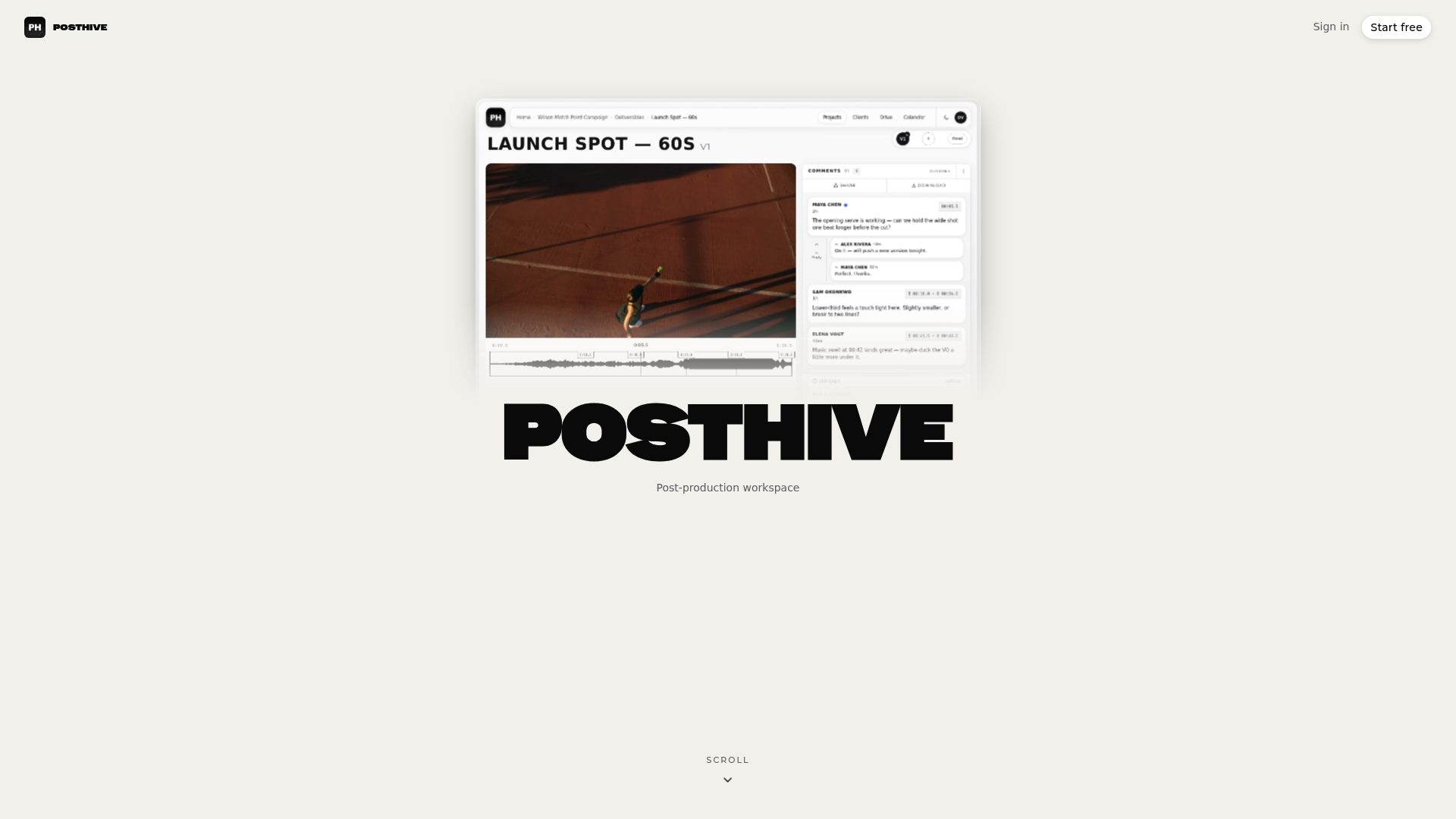
Its workspace structure lets you set up a lane per language with required fields for manifests and sign-off status, so nothing ships without the checks this guide walks through. Pro plans start at $49 per month and Enterprise at $99 per month, both on Posthive’s pricing page. Take a look at how Posthive structures a workspace for a multi-language project before your next deadline.
Where these workflow rules come from
The timing and accessibility rules in this guide draw on published delivery specifications and subtitle research rather than convention alone.
- Netflix’s branded delivery specifications define subtitle and SDH timing tolerance and accepted formats like TTML1 and IMSC1.1.
- Eye-tracking research on subtitle speed and video presence and a separate study on subtitle speed effects on recall support the CPS guidance in this article.
- Practical packaging and handoff guidance comes from a five-stage video localization pipeline built around manifests and batch organization.
Sources
- Localization, Accessibility and Dubbing Branded Delivery Specifications — Netflix Partner Help
- Replication study on subtitle speed and video presence — Szarkowska et al.
- Fast
- Exa
FAQ
What is the standard video translation workflow?
The standard workflow moves through asset preparation, transcription, translation and subtitling, graphics localization, dubbing or assembly, QA, and delivery. An AI plus manual hybrid handles the repetitive steps (draft transcription, machine translation) while humans manage judgment calls like tone, casting, and final sign-off.
How many characters per second should subtitles run?
There is no single correct number since acceptable speed depends on audience familiarity with subtitling and the language involved, as research on subtitle speed and video presence shows. Set a conservative default, then test with target-language viewers and adjust, since one study found slower speeds improved recall and enjoyment for a tested cohort of viewers.
When should I use AI dubbing instead of human voice actors?
AI dubbing works well for internal training content, low-stakes explainers, and fast-turnaround social videos where speed and cost outweigh performance nuance. Human casting remains the better choice for brand-facing, narrative, or emotionally driven content, and for any voice cloning use, get documented consent and disclose synthetic voice use where required.
What subtitle formats do platforms require for delivery?
Delivery specs commonly require TTML1 and IMSC1.1 for final subtitle files, while SRT works fine for internal drafts and review. Netflix’s branded delivery specifications also require subtitle timing to generally conform within 0.5 seconds of the delivered proxy.
How does Posthive help manage a multi-language video project?
Posthive centralizes version control, task tracking, and file manifests in one workspace, so every language’s deliverables stay organized under a single project. Plans start at $49 per month on the Posthive pricing page, with unlimited free seats for teams and clients on every plan.