Asynchronous Video Feedback for Editors: Timecodes, Version Control
Asynchronous Video Feedback for Editors: Timecodes, Version Control

Asynchronous video feedback is recorded, timecoded reviewer commentary that lets stakeholders give richer, more specific comments without scheduling a live call, and it tends to raise both the volume and usefulness of feedback when teams use clear workflows. It works best for remote collaborators, creative teams reviewing drafts, and instructors coaching students who are not in the same room at the same time.
TL;DR:
- A controlled evaluation found reviewers left 10.9 more local comments on video drafts than text and email reviewers during an equal review period.
- Keep recordings under five minutes per deliverable, add captions or transcripts, and speak timecodes aloud so recipients can locate and search specific notes.
- Use a review template with four fields: timecode, observation, example, and requested action; separate required fixes from optional suggestions to clarify priorities.
- At team scale, set review windows that leave time for another revision, assign approval and version ownership, and separate preview rounds from locked master delivery.
- Before recording client or student work, confirm consent, storage location, access permissions, and retention period; protect delivery with expiring links or access controls.
Table of Contents
- Why Asynchronous Video Feedback Works Better Than You’d Expect
- How to Record Feedback That Editors and Learners Can Actually Use
- Templates and Phrasing That Turn Feedback Into Action
- Running Asynchronous Feedback at Team or Class Scale
- What to Look for in a Video Feedback Platform
- What the Research Actually Shows
- Applying This in Real Production Workflows
- Bring Timecode Comments and Version Control Into One Workspace
- FAQ
- Sources
Why Asynchronous Video Feedback Works Better Than You’d Expect
Recorded feedback removes the scheduling problem that kills most review cycles. A reviewer in a different time zone can respond the moment they have ten free minutes instead of waiting for a shared calendar slot, which widens who actually gets to contribute.
The gains go beyond convenience. In a controlled evaluation, reviewers using a video feedback system left 10.9 more local comments on video drafts within a fixed review period than reviewers using text and email, a notable jump in sheer feedback volume. More comments anchored to a specific timestamp also means less guessing about which cut, frame, or sentence a note refers to.
Video also carries tone and emphasis that text strips away, which seems to build what researchers call instructor social presence, a factor tied to higher engagement in online courses.
Three practical effects show up repeatedly:
- Feedback becomes more specific because reviewers can point at the exact moment they mean.
- Participation broadens because reviewers do not need to block out live meeting time.
- Engagement rises when the reviewer’s voice and face add a sense of presence that plain text lacks.
Reviewer workload is the tradeoff worth planning for. Recording a five-minute video takes longer than typing a quick comment, so teams that adopt async video feedback do better when they set expectations on review length and frequency up front rather than leaving it open-ended.
How to Record Feedback That Editors and Learners Can Actually Use
Good async video feedback is short, structured, and easy to skim. A reviewer who rambles for twenty minutes creates more work than they save.
- Keep it under five minutes per deliverable. Long recordings bury the useful notes in filler, and most recipients stop watching before the end.
- Frame the screen so the subject is visible. Share the exact frame or document you’re discussing rather than describing it from memory.
- Record clear audio before worrying about video quality. A clean voice track matters more than a polished webcam shot.
- Break longer reviews into chapters. Chapter markers let a recipient jump straight to the segment that matters to them.
- Add a transcript or captions. This makes the feedback skimmable and searchable, and it supports reviewers or recipients who prefer reading to listening.
- Mark timecodes as you speak. Say the timestamp out loud (“at 1:42”) so it’s easy to cross-reference even if the recipient is scrubbing manually.
- Confirm consent and storage before recording anything involving a client or student. Know where the file lives, who can access it, and how long it stays available.
Pick a hosting category that matches the job: a dedicated review platform with timecode comments for creative work, an LMS-integrated recorder for coursework, or a secure file-sharing host when the priority is simple delivery. Whichever you choose, confirm it supports expiring links or access controls before you send anything containing client material or student work.
Pro Tip: Say the timecode out loud and type it into the comment field at the same time. Redundant markers survive platform exports better than either method alone.
Templates and Phrasing That Turn Feedback Into Action
Vague feedback creates more revision rounds, not fewer. A simple four-part template removes most of the ambiguity: timecode, observation, example, action. State where in the piece you are, what you noticed, a concrete illustration of the issue, and exactly what you want changed.
This works for both creative review and classroom grading. A video rubric that walks through a real example while scoring it produces more detailed feedback and less vague language than a text rubric handed out cold, according to research on video-enhanced rubrics.
A few phrasing habits make reviews faster to act on:
- Name the specific frame, line, or section instead of saying “this part.”
- State the desired outcome, not just the problem (“tighten this to under 10 seconds” instead of “this feels long”).
- Bundle related notes into one comment instead of five scattered ones about the same scene.
- Separate must-fix notes from optional suggestions so creators know what to prioritize first.
Bundling matters more than it sounds. Five separate one-line comments about the same thirty-second clip read as nitpicking; one bundled comment covering all five points reads as a clear brief. Our breakdown on fixing video comment management covers how to group notes without losing the specific timecodes that make them actionable.
Pro Tip: End every video review with a one-sentence summary of the top priority. Reviewers who bury the most important note in the middle often watch it get missed.

Running Asynchronous Feedback at Team or Class Scale
A single reviewer giving occasional feedback barely needs a process. A team of ten running weekly client reviews does.
- Set a review window, not just a deadline. Feedback that arrives the day before final delivery is nearly useless; aim to deliver notes while there’s still a revision cycle left to use them.
- Assign clear roles. Decide who reviews first, who has final approval, and who owns version control, so comments do not pile up without resolution.
- Separate preview rounds from master delivery. A two-round structure, preview feedback then a locked master, keeps revisions from drifting endlessly; our guide on enforcing two rounds walks through the cadence.
- Track simple adoption metrics. Comment count per review, average turnaround time, and revision rounds per project tell you quickly whether the workflow is working or becoming a bottleneck.
- Keep ownership of the deliverable explicit. Confusion over which version is “current” causes more rework than any individual bad comment.
Partners outside the production world run into the same scaling problem. A guide on setting up a content review workflow that starts with a brief makes a similar point: process breaks down fastest when nobody agrees on what “done” looks like before review starts, not during it.
What to Look for in a Video Feedback Platform
Not every tool that lets you leave a comment on a video is built for this. Three categories solve different problems: dedicated review platforms built around timecoded comments, LMS integrations built for grading and coursework, and general file-sharing hosts built for simple delivery without structured feedback tools.
For creative teams, the category that matters most is the first one, specifically because timecode comments need to survive the trip into an editing timeline. Look for:
- Transcripts and captions generated automatically, so feedback is searchable later.
- Calendar sync so review deadlines show up where your team already tracks work.
- NLE timecode export so a reviewer’s comment becomes a marker in the editor’s timeline instead of a separate note to cross-reference by hand.
- Version control that ties each round of feedback to the specific cut it was given on, avoiding confusion over which notes apply to which version.
- Access controls and expiring links for anything shared with clients or outside reviewers, plus a record of who viewed or approved what.
Our post on turning timecoded comments into NLE markers covers why that export step specifically prevents what editors call marker drift, where a comment’s timestamp no longer lines up with the frame it was meant for.
What the Research Actually Shows
The case for async video feedback isn’t just anecdotal. A controlled study found reviewers left 10.9 more local comments, standard deviation 5.09, on video drafts within a fixed time window compared to text-based review, meaning video feedback didn’t just feel more thorough, it produced measurably more of it.
A 2025 study of 176 undergraduates found students who received asynchronous video feedback had better academic outcomes than those who received written feedback alone, suggesting the instructor’s visible presence in the video adds something text can’t replicate.
A separate pilot study testing an asynchronous video review platform in clinical education reported strong usability scores: utility rated 4.4 out of 5 and ease of use 4.1 out of 5, alongside increased participation among reviewers who could not meet in person.
Taken together, these findings point in one direction: video feedback tends to produce more comments, more specific comments, and in at least one academic study, better outcomes than written feedback alone. The practical takeaway for a workplace or classroom is to treat video as the default for anything that benefits from tone, context, or pointing at a specific moment, and reserve quick text notes for small, unambiguous fixes.
Applying This in Real Production Workflows
In post-production, the email thread is usually where feedback goes to die. Replacing it with recorded, timecoded reviews cuts the back-and-forth dramatically; a client points at the frame instead of describing it, and the editor doesn’t have to guess which “the part near the end” they mean.
The biggest shift is cultural, not technical. Teams that treat async video as the default review method, rather than a backup for when a call can’t happen, see fewer rounds of revision and clearer sign-off. Our post on running client reviews without endless email threads walks through how that shift plays out day to day.
— Lorenz
Bring Timecode Comments and Version Control Into One Workspace
Everything this guide recommends, timecode comments that export cleanly into an NLE, version control that prevents marker drift, and secure delivery for client masters, is what our platform is built around. 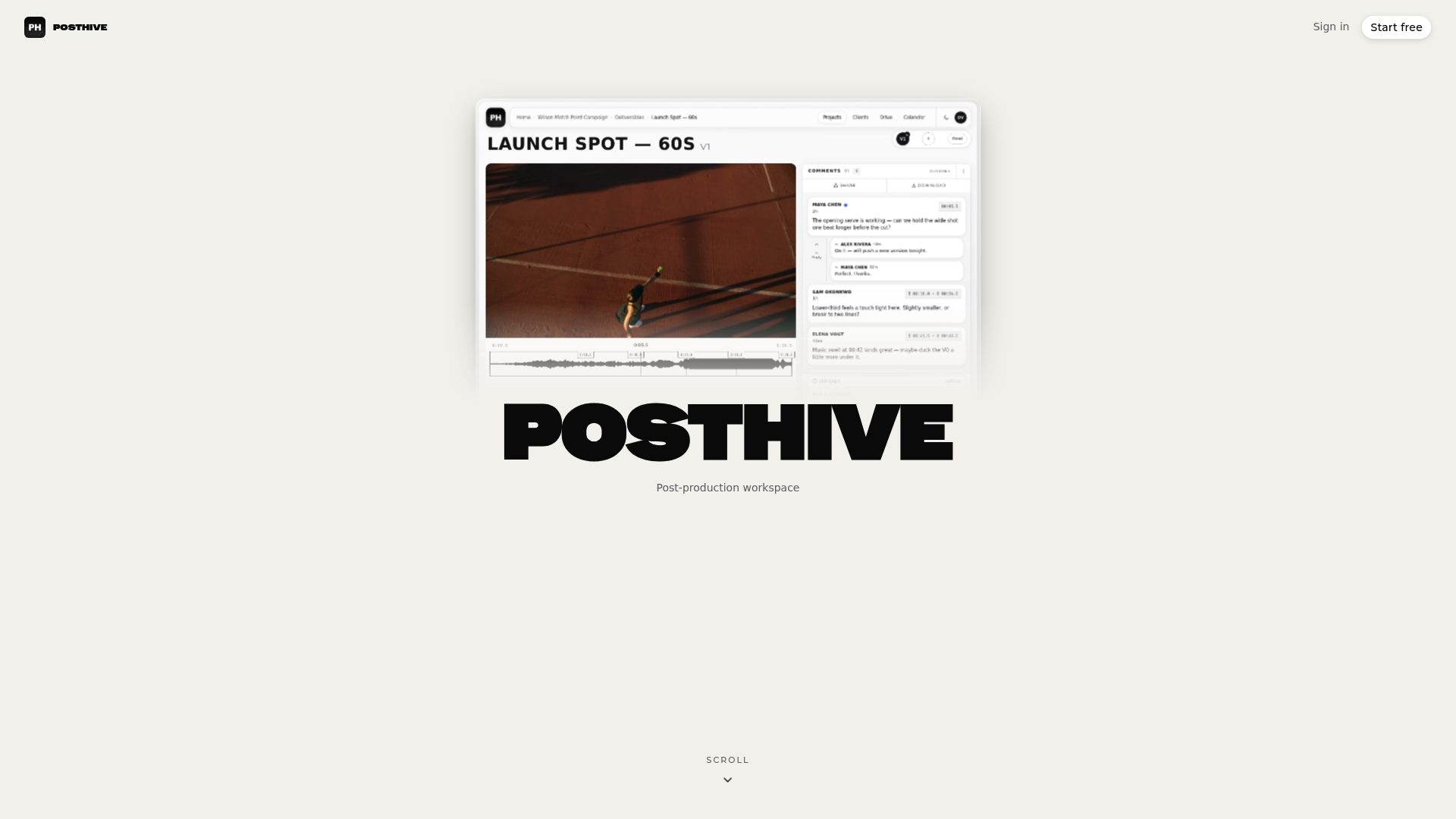
- Comments anchor to exact timecodes and carry into your editing timeline as markers instead of a separate list to cross-reference.
- Plans include unlimited free seats for clients and collaborators, so review doesn’t get gated behind per-seat pricing.
- Calendar sync keeps review deadlines visible alongside the rest of your production schedule.
- Secure delivery separates preview rounds from the final master, so approval stays auditable.
Our Pro plan runs $49 per month, and Enterprise is $99 per month for teams that need more storage and higher review volume. Check pricing and plan details to find the right fit for your team’s review volume.
FAQ
What does “asynchronous interview” mean?
An asynchronous interview is a recorded question-and-answer exchange where the interviewer and candidate respond at different times instead of in a live conversation. Candidates typically record video answers to pre-set questions on their own schedule, and reviewers watch and respond later.
Where can I upload a video to get feedback?
Dedicated review platforms built around timecoded comments are the best fit for structured feedback, since they let reviewers mark exact moments rather than describing them in a separate message. General file-sharing services work for simple delivery, but they usually lack the comment-to-timecode linking that makes feedback actionable.
Which of these is an example of asynchronous communication?
Recorded video feedback, email, and discussion board posts are all asynchronous because the sender and recipient don’t need to be present at the same time. A live video call or an instant messaging conversation happening in real time is synchronous instead.
What is async feedback?
Async feedback is commentary, written, audio, or video, that a reviewer delivers on their own schedule rather than during a live meeting. The recipient reviews and responds to it later, which removes the need to coordinate calendars for every round of notes.
Sources
- VidCrit: Video-based Asynchronous Video Review
- Does written vs video feedback affect students’ online learning and alliance with their teacher (2025)
- Video review by utilizing asynchronous video communication platform (pilot study)