Pro Videographers: Secure Masters with a Preview to Master Workflow
Pro Videographers: Secure Masters with a Preview to Master Workflow

For most professional workflows, the best way to deliver video to clients is a dual approach: a branded, streamable preview for easy viewing and feedback, paired with a secure, downloadable master for final handoff. The preview favors convenience, the master protects fidelity and security. Upload the preview first, gather approval, then share an access-controlled link to the final file.
TL;DR:
- Branded preview galleries are ideal for quick approval and social sharing but are unsuitable for archival quality masters due to compression.
- Secure, access-controlled download links are best for delivering high-quality masters, especially for large files or long-term storage needs.
- Using passwords and expiry dates for links balances security with convenience, but domain restrictions and DRM are necessary for sensitive or paid content.
- Running the delivery workflow within a centralized workspace reduces errors, consolidates feedback, and ensures all files and notes stay organized.
Table of Contents
- Choosing the right delivery method for each client
- A step-by-step delivery workflow from preview to final handoff
- Locking down access: security, rights, and delivery proof
- Export settings that keep deliverables playing correctly
- Running this workflow inside one workspace
- When convenience beats control, and when it doesn’t
- Run your delivery workflow inside Posthive
- FAQ
- Sources
Choosing the right delivery method for each client
The right delivery method depends on the project type, the client’s technical comfort, and how much control you need over the final file.
Branded streamable galleries work best for approvals and social clips. Clients can watch instantly on any device, leave comments, and share a link with their own stakeholders without downloading anything. The tradeoff is compression: streaming platforms reduce bitrate for fast playback, so galleries are not the place for archival masters.
Cloud direct-download links suit masters and long-term archives. A simple shared link from cloud storage lets clients grab the original file at full quality, though large exports can strain storage limits and slow transfers for clients on weaker connections.
Security-first hosted players with digital rights management become necessary when content is monetized or sensitive. Choosing a video hosting platform should start with the specific job you need done, whether that’s analytics, security, or revenue protection, then testing two finalists against setup speed and reporting fit, according to G2’s platform comparison.
Physical drives still have a place when file sizes are enormous or a client’s internal policy requires offline handoff, such as broadcast masters or long-form documentary footage.
- Branded galleries: best for client-facing previews and social-ready cuts.
- Direct download links: best for archival masters and large single files.
- Security-first hosted players: best for paid courses or licensed content.
- Physical drives: best when file size or client policy rules out upload.
A step-by-step delivery workflow from preview to final handoff
A repeatable process cuts down on rework and protects the final asset from getting lost in email threads.
- Upload a preview. Export a watermarked or lower-resolution cut and share it through a branded gallery for early approval.
- Consolidate feedback in one place. Use timecoded comments or a shared review workspace instead of scattered emails, so every note lives against the actual frame it references.
- Lock the approved cut. Export the master using a clear naming convention, such as projectname_v01_master_DATE, so nobody confuses a draft with the final file.
- Deliver the master securely. Share it through a password-protected or expiring link, request a confirmation from the client, and store an archive copy before closing the project.
A short handoff email makes step four smoother: state the file name, the resolution, how long the link stays active, and who to contact with playback issues. Our guide on sharing large video files without losing quality walks through compression choices that keep masters intact during transfer.
Pro Tip: Send the download confirmation request in the same email as the delivery link, so clients reply once instead of after you follow up a week later.
Locking down access: security, rights, and delivery proof
Security measures should scale with what’s at stake, not apply uniformly to every project.
Password-protected links with expiry dates cover most client work: they stop casual leaks without adding friction. For higher-stakes files, domain restriction or signed URLs limit who can open a link even if it gets forwarded. Our walkthrough on password-protected video sharing covers the setup in practical terms.
Platform-level DRM and security-first hosting matter when content is paid or proprietary, since they add anti-download and anti-screen-capture protections that general-purpose storage lacks, as outlined in G2’s DRM software category. That protection comes with more setup work, so it’s worth reserving for licensed content or paid courses rather than a routine client cut.
Platform analytics and download logs are standard ways to confirm a client actually received a file, which closes the loop without relying on a client remembering to reply. G2’s hosting comparison treats this tracking as a baseline feature to check before committing to a platform.
- Add a password and expiry date to every shared link by default.
- Reserve domain restriction or signed URLs for sensitive or proprietary footage.
- Note usage rights and ownership terms directly in the delivery email.
- Confirm delivery through view analytics, download logs, or a client reply.
Export settings that keep deliverables playing correctly
Clients notice format problems before anything else, so export rules of thumb matter as much as the delivery method itself.
- Archival masters: export ProRes or high-bitrate HEVC, named with a clear version and date so nobody opens the wrong file.
- Web and social copies: use H.264 or H.265 MP4 at adaptive bitrates sized for common resolutions like 1080p and 4K.
- Color and audio: stick to Rec. 709 for standard delivery unless the client specifies otherwise, and pair video with WAV for broadcast or AAC stereo for web use.
- File size planning: a few minutes of high-bitrate master footage can run into several gigabytes, which is often the point where a direct download link or physical drive beats email attachments.
A partner resource on professional deliverable formats breaks down container and codec choices in more technical depth if a project calls for broadcast specs.
Running this workflow inside one workspace
Juggling preview links, feedback threads, and final file transfers across separate tools is where most delivery mistakes happen: a note gets buried, or a client downloads an unapproved draft.
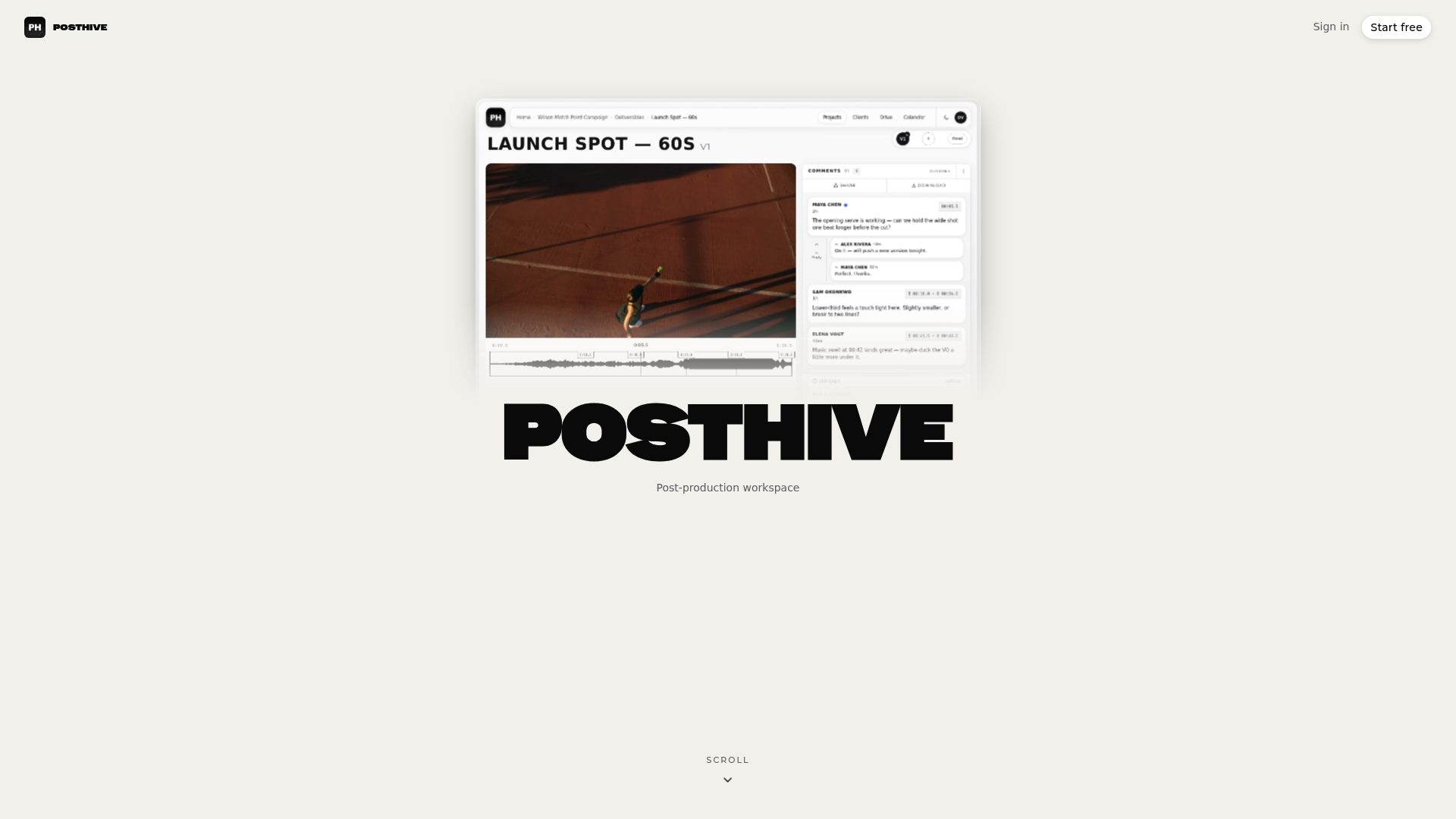
A central workspace that tracks versions, consolidates feedback, and manages secure delivery removes most of that risk, since every note and file version lives against the same project instead of scattered across apps. Posthive’s workspace is built around that structure: clients retain ownership of their deliverables and versions, version control keeps drafts and finals clearly separated, and secure media delivery runs through the same place the feedback happened. Our post on video version control for creative teams covers how that naming and audit trail works in practice.

When convenience beats control, and when it doesn’t
Most client work rewards speed. A quick branded preview and a straightforward download link keep projects moving and keep clients happy, and locking down every file with DRM or signed URLs for a routine wedding edit or corporate update adds friction nobody asked for.
The calculation changes for paid content, licensed footage, or enterprise clients with compliance requirements. There, the extra setup time for stricter access controls is the cost of avoiding a much bigger problem later.
— Lorenz
Run your delivery workflow inside Posthive
We built Posthive around the exact handoff this article describes: version control that keeps drafts separate from finals, secure media delivery, client ownership of deliverables, and a shared review space so feedback never gets lost in email. Our plans allow clients and collaborators to join without additional per-editor costs.
Check our pricing page to compare the Pro and Enterprise plans and find the storage and feature tier that matches your delivery volume.
FAQ
What is the best way to deliver video to clients?
The most reliable approach pairs a branded streaming preview for review and approval with a secure, access-controlled download link for the final master. This gives clients an easy way to watch and comment while keeping the full-quality file protected until it’s confirmed received.
How much should a 3 minute video cost?
Pricing varies widely by scope, but agency hourly rates typically fall between $100 and $149 per hour, so a short project’s total cost depends heavily on production complexity and revision rounds. Getting a quote based on your specific brief is more accurate than relying on a flat per-minute rate.
What are the best video delivery platforms?
The right platform depends on the job: some excel at analytics, others at captions, affordability, or enterprise governance, according to G2’s platform analysis. Testing two finalists against your onboarding speed and reporting needs is a more useful comparison than picking by reputation alone.
What’s the best way to send videos to people?
For most personal or small-project sharing, a cloud-based direct download link is simplest, while larger or sensitive files benefit from password protection and an expiry date. Our guide to sharing large files without losing quality covers compression choices that keep the transfer practical.
Sources
- Which video hosting platform is best? — G2 Learn
- Video Production Pricing Guide — Clutch
- Digital Rights Management (DRM) Software | G2