Transcript Translation for Production Teams: 5 Stages to TTML/IMSC1
Transcript Translation for Production Teams: 5 Stages to TTML/IMSC1

Transcript translation in media production means translating a timecoded transcript of spoken audio or video so it can ship as subtitles, captions or dubbing scripts. The workflow we recommend: native-speaker transcript, spotting, translation and adaptation, in-picture simulation with QA, then delivery as standard timed-text files such as TTML/IMSC1, plus SDH where required and human-verified review throughout.
TL;DR:
- For multilingual projects, create the transcript before picture lock so translators can use a timecoded template; for one language needing exact timing, wait until lock.
- Deliver TTML/IMSC1 as soft subtitles rather than burned in, confirm current distributor limits before spotting, and provide a separate SDH file when required.
- Use AI for drafts, bulk transcription, and template pre spotting, but assign linguists to adapt performance, verify SDH and cultural nuance, and review final files.
- When schedules tighten, preserve the picture simulation and native speaker’s final read; log each correction in a numbered version to prevent edits from being lost.
Table of Contents
- How does the production workflow run, stage by stage?
- Which file formats and technical specs should you plan for?
- Where does AI help, and where do humans still have to verify?
- What belongs on your subtitle QA checklist?
- How do you fit transcript translation into your post pipeline?
- What do teams most often get wrong?
- Keep translation passes organized in one place
- FAQ
- Sources
How does the production workflow run, stage by stage?
Think of the job as a series of handoffs, each with an owner and a file. The ATAA guide to subtitling and dubbing describes professional audiovisual translation as transcription and spotting, then translation and adaptation, then a simulation pass that checks text rhythm against the edit.
- Transcription: a native speaker of the source language produces the transcript. Decide up front whether it is verbatim or cleaned, because dubbing scripts and subtitles need different things from it. Our notes on the video transcription workflow cover timecoding and version control in detail.
- Spotting: set in and out cues aligned to frames, so subtitles land on edit cuts and give viewers enough reading time. The output is a timecoded template.
- Translation and adaptation: the translator condenses, adapts for reading speed and keeps tone. Dialogue is performance, so the text should follow lip movements, breathing and body language. A generic translator without audiovisual experience commonly produces subtitles that run too long or miss tonal nuance.
- Simulation and QC: play the subtitles over the locked picture, check readability, timing and SDH elements, and log every correction as a new version.
- Sign-off: one named person approves the final timed-text file.
Research on subtitling production models finds that transcript-first workflows are efficient for multilingual projects when templates and spotting are used. For a PM, that means the transcript and template are the assets you schedule around.
Which file formats and technical specs should you plan for?
Plan for TTML/IMSC1 timed-text first. These formats keep subtitles interoperable across platforms and support multiple languages and SDH within a single master, which is why W3C’s TTML profile is the reference most distributors point to. Netflix’s delivery specifications require TTML/IMSC timed-text, set rules for SDH and prefer soft-coded subtitles over burned-in ones. For a deeper comparison, see our guide to subtitle file formats.
| Item | What to plan for | Where it comes from |
|---|---|---|
| Primary timed-text format | TTML/IMSC1 | W3C TTML profile |
| Subtitle delivery | Soft-coded, not burned in | Netflix delivery specifications |
| Accessibility track | Separate SDH file where required | Netflix delivery specifications |
| Audio packaging | Sampling rate and file wrapping defined by SMPTE/IMF | SMPTE ST 2067-2 |
- Keep a Forced Narrative list for on-screen text, so localization does not require re-rendering the video master.
- When packaging for IMF, check the SMPTE core constraints: audio sampling, file wrapping and timed-text resource structure all affect synchronization.
- Confirm character-per-line and duration limits with the distributor’s current spec before spotting begins.
Teams that also handle synchronized audio and text can find useful background on timing in this guide to EPUB media overlays.
Where does AI help, and where do humans still have to verify?
AI is good at fast multi-language drafts, bulk transcription and pre-spotting templates. The EBU report on LLMs in media organizations notes that as of 2025 these tools speed up transcription and translation, but broadcasters still find human-verified review essential. AI translations often need significant correction before they meet broadcast guidelines, and the report points to native speakers for transcription and translation.
- Use AI for first drafts, bulk transcripts and template pre-spotting.
- Use linguists for performance adaptation, SDH accuracy and cultural nuance.
- Measure meaning-based quality rather than word error rate alone, and track correction time as a practical metric.
The pattern that works: AI draft, linguist post-edit, simulation and QC, final delivery.
Pro Tip: Log post-edit time per language on your first AI-assisted job. That number tells you whether the draft saved time or just moved the work.
What belongs on your subtitle QA checklist?
- Check limits: apply character-per-line and reading-speed guidance, and the minimum gap between subtitles. The ATAA subtitling norms give ranges for cinema, streaming and TV.
- Apply the style guide: italics, inserts and dialogue formatting follow the client’s rules.
- Run a linguistic pass: a native speaker reads the subtitles as text.
- Run a picture-simulated pass: play against the locked edit and note every timing or readability issue.
- Record versions: each correction becomes a new, numbered file for auditability.
- Finalize metadata: translator credits where requested, clear filenames, and the Forced Narrative list if needed.
Our QA workflow expands on steps 3 and 4.
Pro Tip: When time runs short, protect the in-picture simulation and a native-speaking final read. Cut everything else first.

How do you fit transcript translation into your post pipeline?
Timing decides the schedule. For multi-language projects, create the transcript before picture lock so translators can start from a template. For a single language with final-timing needs, wait until after lock. Our video translation workflow checklist walks through the phases.
- Handoff files: a timecoded source transcript, an unlocked template for translators, and the final TTML/IMSC1 file.
- Single owner: assign one person to final simulation and QC, and keep version control across edits so nothing gets overwritten.
- Translator kit: a glossary of names and terms, plus sample frames that show performance and lip-sync expectations.
What do teams most often get wrong?
Recurring mistakes that can cost teams time include hiring non-specialist translators, skipping the in-picture simulation, and losing track of versions. A translator who understands pacing and performance saves you rounds of rework, and standards like TTML/IMSC1 keep your files accepted and accessible. I cover more of these workflows on our blog, and the checklist posts linked above are a good place to continue.
— Lorenz
Keep translation passes organized in one place
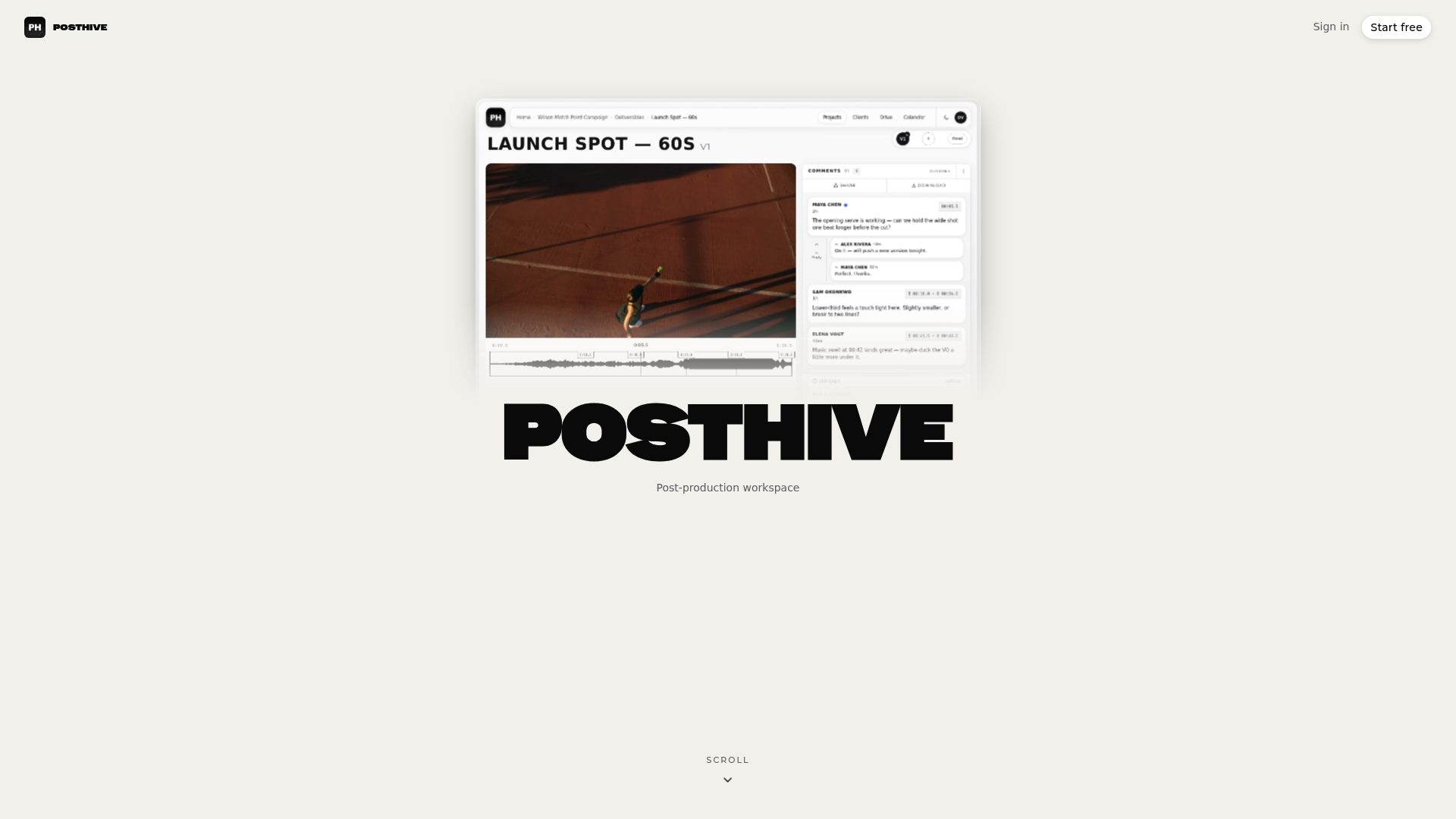
We built Posthive so translation rounds stop living in scattered email threads. You get version management, task tracking and secure media delivery, alongside support for transcription and translation workflows. Try it on a live project from our home page, or compare the Pro ($49 per month) and Enterprise ($99 per month) plans on our pricing page.
FAQ
What is transcript translation in media production?
It is the translation of a timecoded transcript of spoken audio or video into another language for subtitles, captions or dubbing scripts. Spotting and adaptation happen alongside translation, so the text fits the edit.
Which file format should I deliver translated subtitles in?
TTML/IMSC1 is the safest default, since Netflix’s delivery guidance requires it and it supports SDH and multiple languages. Always confirm the distributor’s current spec before delivery.
Can AI translate my video transcript on its own?
AI can produce fast drafts, but human review remains essential for broadcast-grade work. The EBU report notes that AI output often needs significant correction.
When should I create the transcript: before or after picture lock?
Before lock for multi-language projects, so translators can work from a template. After lock for a single language when exact final timing matters.
Sources
- Subtitling and Dubbing for Film and Television
- TTML Profiles for Internet Media Subtitles and Captions 1.2
- TR 083 - Usage and Evaluation of LLM in Media Organizations
- Localization, Accessibility, and Dubbing Branded Delivery Specifications – Netflix | Partner Help Center
- Interoperable Master Format — Core Constraints